
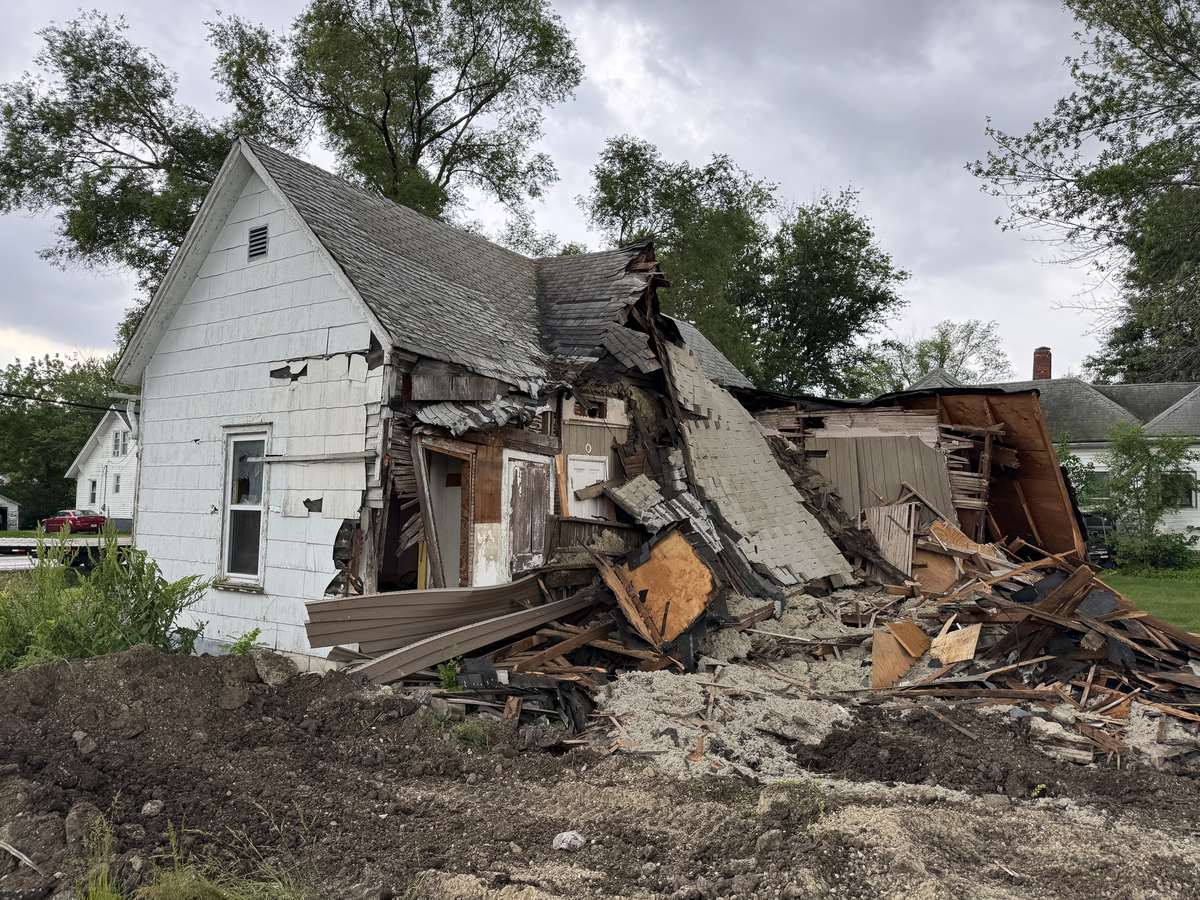
"So what actually happens the day you show up?" is one of the most common things I hear from property owners around Columbia once the paperwork is done. Short answer: a quiet hour of setup, a loud few hours of machine work, a long afternoon of loading trucks, and a lot that looks nothing like it did at breakfast. I'm Chris Kurtz, owner of ATLAS Demolition & Site Work in Columbia, MO. Here's what to expect during demolition, hour by hour, so nothing about the day surprises you or your neighbors.
Quick Answer: What to expect during demolition of a house in Columbia, MO: the crew arrives around 7 a.m., walks the building, confirms every utility is off, and sets up a safety zone. The excavator starts at the roof and takes the house down into its own footprint, usually in a few hours for a one-story home. The rest of the day, and often a second day, is sorting, loading and hauling debris, then pulling the foundation, backfilling and rough grading. Plan on noise, some dust, truck traffic, and ground vibration while concrete is being broken. Most houses take 1 to 3 days on site. You don't have to be there, but you can watch from a safe distance.
In This Guide:
Before the Machine Starts: What's Already Done
Knowing what to expect during demolition starts with knowing what's already finished. By the time the machine shows up, the slow part of the job is behind you.
The permit is issued. The asbestos inspection is back, and any regulated material has been removed by a registered abatement contractor. The Missouri DNR notice period has run. Every utility has been disconnected and confirmed in writing, which we covered in our post on utility disconnects before a teardown.
That lead-up is usually 3 to 6 weeks, and our house, garage and barn teardown page lays out everything that's included in it. The day itself is short by comparison. A day or two ahead, we move the excavator in on a trailer, set the first container, and check that the Missouri 811 locate marks are on the ground. If you see paint and little flags in the yard, leave them where they are.
Here's what we ask of you before the crew shows up:
- Empty the building. Anything still inside gets crushed with the house and billed by the ton. That's the most expensive way there is to throw away a couch.
- Move vehicles and trailers. Clear the driveway and anything parked along the property line.
- Tell us what stays. A tree, a fence, a shed, a well you plan to reuse. We flag it on the walkthrough and again that morning.
- Give the neighbors a heads-up. A week of notice turns most complaints into curiosity.
Demolition Day Morning: Arrival and Setup (7 to 8 a.m.)
We roll in around 7. Inside city limits, Columbia's noise rules allow demolition work between 7 a.m. and 7 p.m. on weekdays, with shorter hours on weekends. The city explains those limits on its extended work hours page. We schedule teardowns on weekdays for that reason.
The first hour is quiet. People asking what to expect during demolition usually picture the machine swinging at 7:01, and that's not how it goes.
We walk the building one last time, every room, the attic, the crawlspace or basement, to be sure nobody and nothing is inside. We look at the meter bases, the gas riser, and the sewer cap with our own eyes, even though the certificates are already in the file. Paper says it's off. We check that it's off.
Then the safety zone goes up. That means caution tape or fence panels around the work area, cones at the street, and a route picked out for the trucks. The operator and the ground man agree on the plan: which wall comes first, where the debris lands, and where the trucks load. From that point on, nobody but the crew is inside the line.
What to Expect During Demolition Itself: The Teardown (8 a.m. to Noon)
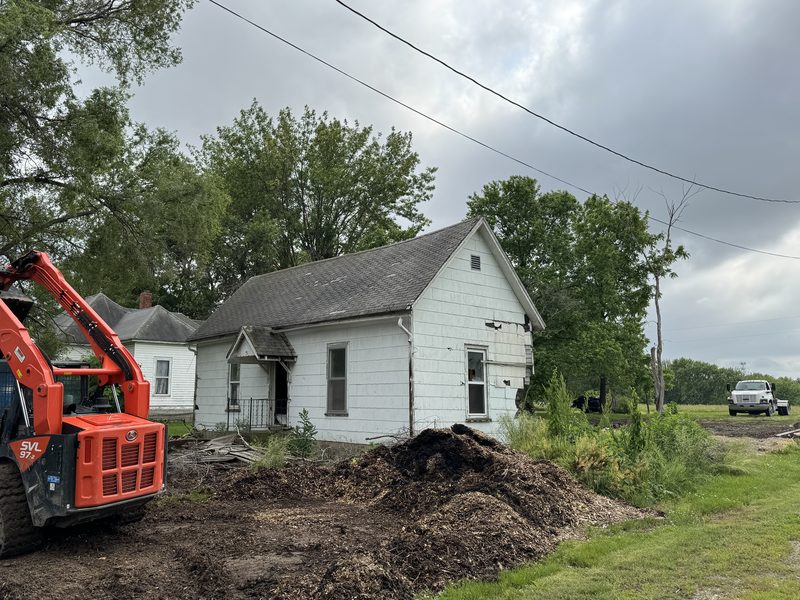
This is the part everybody pictures. For most houses we run a 2019 Cat 308 excavator with a hydraulic thumb. For a two-story house or a big barn, we bring in a 13 to 15 ton machine. There's no wrecking ball, and the house doesn't get pushed over in one shove. It gets taken apart from the top down.
The operator starts at a corner away from the neighbors and any overhead lines. The roof gets peeled first, then the walls get pulled inward so the building drops into its own footprint. Chimneys come down early, while there's still structure around them to catch the brick. A one-story frame house on a crawlspace is usually on the ground before lunch. A two-story or a house with a full basement takes longer.
It looks like chaos. It isn't. The operator is sorting while he works.
Metal like the furnace, water heater and ductwork goes in one pile. Concrete and brick go in another. Wood and mixed debris go in a third. The ground man stays where the operator can see him, runs water when the dust calls for it, and keeps the street clear.
What surprises people most: how fast the building comes down, and how slow the cleanup feels by comparison. The structure is a few hours. Loading, hauling, the foundation and the grading are the rest of the job.
Noise, Dust, Vibration and Truck Traffic
A big part of what to expect during demolition is what it's like to stand next to. I'd rather tell you straight than have you find out at 8 a.m.
It's loud. You'll hear a diesel engine, cracking lumber, steel on concrete, and back-up alarms. The loudest stretches are the teardown itself and the hydraulic breaker on the foundation. It's daytime work, and it's over in a day or two.
Dust
Old plaster, insulation and dry soil all make dust. The water service is already capped by this point, so we bring water with us, a tank on the truck for most houses or a hydrant meter on bigger jobs. We wet the material at the machine. Close the windows on the side facing the work, and ask the neighbors on that side to do the same. If the wind is blowing hard toward a neighbor's house, we slow down or work from the other side.
Vibration
The teardown itself barely shakes the ground. Breaking a foundation or a slab does. Neighbors may feel it through the floor, a lot like a heavy truck idling out front. That's normal, and it lasts only as long as the concrete does. On tight lots, it's worth photographing the neighboring walls and driveways before the work starts so everybody has a record.
Trucks
Debris leaves in roll-off containers or dump trailers, and a house fills more of them than people expect. Trucks come and go through the afternoon. We keep them off the lawns, we don't block the neighbors' driveways, and we sweep the street before we leave for the day.
Afternoon: Sorting, Loading and Hauling
After lunch, the job turns into trucking. This is the stretch nobody mentions when they describe what to expect during demolition, and it's most of the day.
The excavator loads out the sorted piles one at a time. Concrete and brick go to a recycler, where they get crushed into base rock. Steel goes to the scrap yard. Mixed debris goes to a permitted landfill, which for most of our jobs in town is the City of Columbia Landfill on Peabody Road. Our post on where demolition debris goes in Columbia covers that side in detail.
Every load gets weighed, and you get the scale tickets. Our pricing is a fixed number for the crew and equipment, with disposal passed through at actual tonnage. The tickets are your receipt for that part.
A small house with no basement can be loaded out by the end of the first day. Most run into a second day. That's not a delay. That's the job. Our post on how long demolition takes has the on-site numbers for every type of structure.
Foundation, Backfill and Final Grade
Ask most people what to expect during demolition and they stop at the house coming down. A house that's gone is not a job that's done. The foundation walls, footings, and the slab or basement floor come out next, usually with the breaker on the excavator. That concrete gets hauled to the recycler.
It doesn't get pushed into the hole and buried. A lot with a basement full of broken block will settle for years, and no builder wants it.
The hole gets backfilled with clean fill, compacted in lifts so it stays put. Then we rough grade the lot so it sheds water and a mower can cross it. If you're building on the site, tell us early. Our site work crew can carry straight into pad prep and finish grade on the same contract.
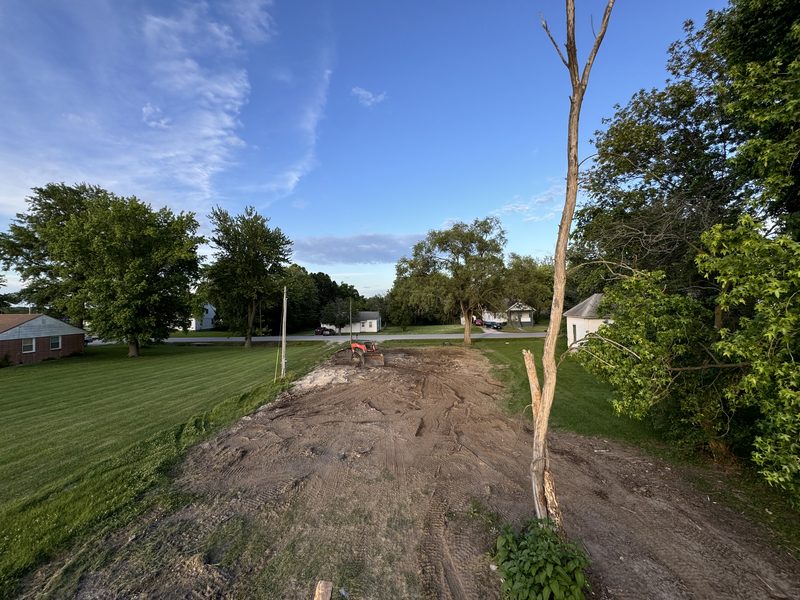
Last, we walk the lot for nails and scrap, sweep the street, and pull the tape. Inside Columbia, the city comes out for a final inspection, and passing it is what releases your $2,000 cash bond.
Here's what to expect during demolition on a typical house, laid out by the clock.
| Time | What's Happening | What You'll Notice |
|---|---|---|
| 7 to 8 a.m. | Crew arrives, final walk of the building, utilities verified, safety zone set | Trucks on the street, tape going up, not much noise yet |
| 8 a.m. to noon | Excavator takes the structure down from the roof, sorting as it goes | The loud part. Dust on the downwind side |
| Noon to 4 p.m. | Sorted piles loaded and hauled to the recycler, scrap yard and landfill | Truck traffic, back-up alarms |
| Late day one or day two | Foundation and slab broken out and hauled | Breaker noise, vibration next door |
| Final hours | Backfill, compaction, rough grade, street swept | A flat lot |
When Demolition Day Doesn't Go to Plan
Most days go the way they're drawn up. Some don't. Part of knowing what to expect during demolition is knowing what can change the plan and what we do about it.
- Weather. Light rain helps with dust, and we work through it. Lightning, high wind or saturated ground stops the job. We reschedule by the day, not by the week.
- Suspect material. If something turns up that wasn't in the inspection report, like old pipe wrap behind a wall, work stops in that area. A Missouri-certified inspector samples it. If it's regulated, a Missouri-registered abatement contractor removes it under our contract before we go on. Our post on asbestos found during demolition in Missouri walks through that stop from start to finish.
- Buried surprises. Old cisterns, a fuel oil tank, a second slab under the first, the foundation of a house that stood there before this one. We stop, show you, and price it in writing before we touch it.
- Equipment. A hydraulic hose blows now and then. That costs an hour or two, not the day.
Demolition Day in Columbia vs. Boone County and the Rest of Mid-Missouri
The work is the same everywhere. The day feels different depending on the address, and what to expect during demolition changes a little with it.
Inside Columbia: lots are tight, service lines run overhead, and the neighbor's house can be 10 feet away. In the older neighborhoods the machine makes smaller moves, there's more hand work at the edges, and trucks stage on the street. The city's final inspection and the bond release come at the end.
Unincorporated Boone County and the rural routes: there's room to work and nobody close enough to mind the noise. The haul to the landfill is longer, the roads are gravel, and there's usually a well or a septic tank to work around. Farmhouses near Hallsville, Harrisburg, Ashland and Centralia tend to go this way. There's no county demolition permit, but Missouri's asbestos rules still apply.
Jefferson City, Fulton, Boonville and Moberly: each town has its own permit and its own inspector. The work day looks the same.
One thing that's true across Mid-Missouri is the clay. It holds water. After a week of rain, a lot turns to grease, and sometimes the right call is to wait two days for it to dry instead of rutting your yard and tracking mud down the street. We handle demolition in Columbia, MO and about 45 minutes in every direction, and the clay is the same in all of it.
Have a House, Garage or Barn That Needs to Come Down?
I'll walk the property with you, tell you what to expect during demolition on your lot, and put a fixed price in writing.
Request a Free Consultation Call (573) 234-6641Frequently Asked Questions
How long does demolition day take for a house?
Most houses around Columbia, MO take 1 to 3 days on site. The building itself usually comes down in a few hours, often before lunch on the first day for a one-story frame house. The rest of the time goes to sorting and loading debris, hauling it to the recycler and the landfill, breaking out the foundation, backfilling and rough grading. A small house on a crawlspace with good truck access can be finished in one long day. A two-story house with a full basement on a tight city lot is closer to three. Garages, sheds and mobile homes are usually single-day jobs. Weather and anything unexpected in the ground can add a day.
Do I need to be home on demolition day?
No. Once the proposal is signed and the building is empty, we don't need you on site, and plenty of owners are at work or out of state while we tear down. We do need you reachable by phone in case we uncover something that needs a decision, like a buried tank or a second slab. If you want to see for yourself what to expect during demolition, come watch. Stay outside the taped-off work zone, across the street if you can, and keep kids and pets with you. Nobody but the crew goes inside the line while the machine is running. That rule applies to owners, neighbors, and the guy who wants to ask about the old bricks.
How loud and dusty is a house demolition?
Loud enough that the whole block will know it's happening, and dusty enough that you'll want windows closed on the side facing the work. The noise comes from the excavator's diesel engine, breaking lumber, back-up alarms, and the hydraulic breaker on concrete, which is the loudest part. Inside Columbia city limits, demolition work is limited to daytime hours, and we schedule teardowns on weekdays. For dust, we wet the material at the machine using a water tank on the truck, because the water service to the house is already capped. Dust is worst for the first few hours while plaster and insulation are coming down, and it drops off once the job turns to loading.
What should I tell my neighbors before demolition?
Tell them the date, the start time, and how long it'll last, about a week ahead if you can. Most neighbor complaints come from surprise, not from the work itself. Let them know to close windows on the side facing your lot, move cars parked along the property line, and expect trucks on the street through the afternoon. If they have a fence, shed or garden right on the line, point it out to us on the walkthrough so we can protect it. Give them my number, (573) 234-6641, so they can call the contractor directly instead of calling you at work. A neighbor who knows what to expect during demolition is almost always fine with one or two loud days.
What happens if you find something unexpected during demolition?
Work stops in that spot and you get a phone call. The common surprises are suspect asbestos material that was hidden behind a wall when the inspector came through, a buried fuel oil tank, an old cistern or well, or a second foundation under the first. For suspect material, a Missouri-certified inspector samples it, and if it's regulated, a Missouri-registered abatement contractor removes it under our contract before we go any further. For buried items, we show you what we found, send photos, and give you a written price for dealing with it before we touch it. Nothing gets added to the bill without your approval. A good pre-demolition inspection and walkthrough keep these surprises rare.
Planning a Teardown in Columbia, MO?
Now you know what to expect during demolition, from the first truck to the last pass with the grader. The other half is picking a contractor who runs the day the way it's described here. ATLAS Demolition & Site Work handles house, garage, barn and mobile home teardowns across Columbia, Boone County and the rest of Mid-Missouri. We answer the phone, we show up when we say, and we leave the lot clean and graded.
- Phone: (573) 234-6641
- Email: chris@deployatlas.com
- Online: Request a Free Consultation or send us a message