
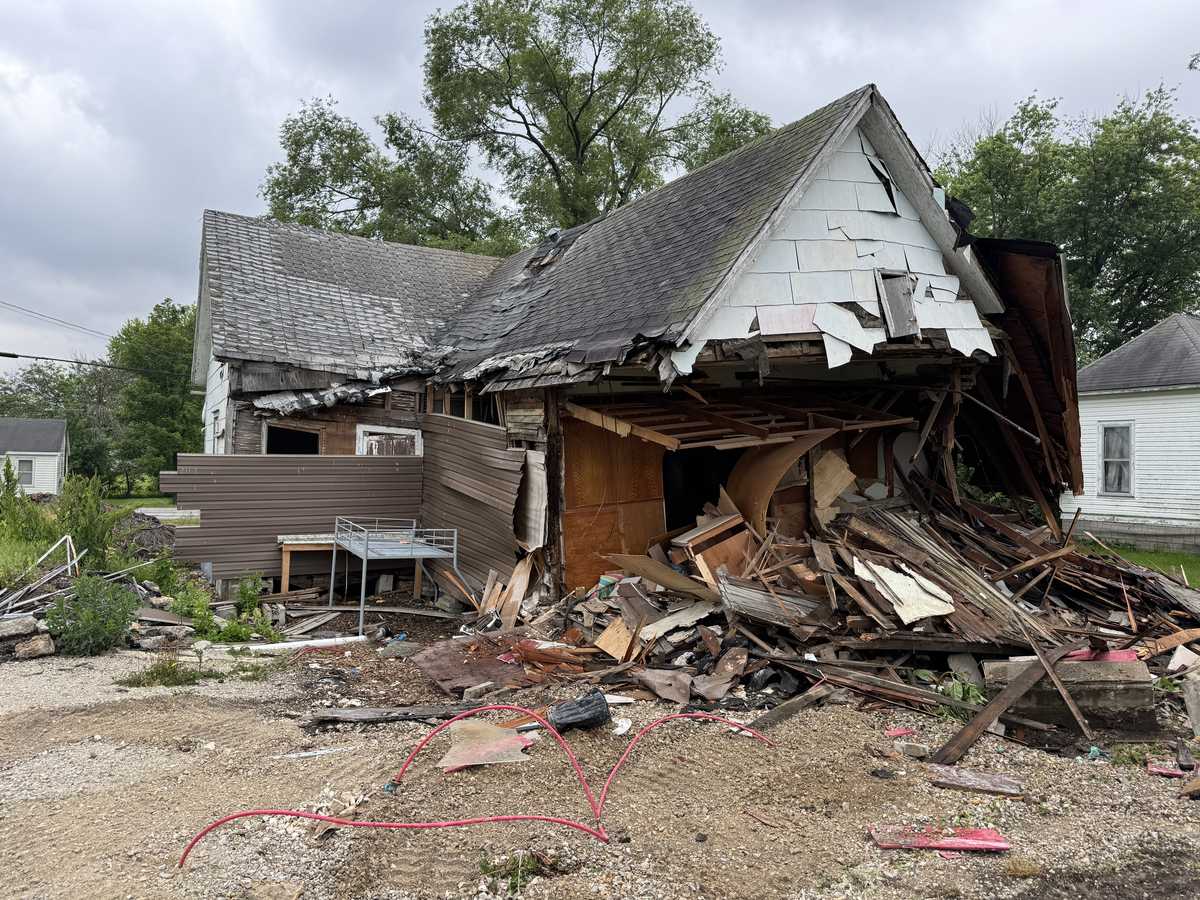
"What happens if you find asbestos halfway through?" is a question I hear from property owners around Columbia, usually right after they've read the inspection report and realized how much of an old building nobody can see into. Short answer: the machine stops, a certified inspector samples the material, and nothing in that area moves until a lab says what it is. I'm Chris Kurtz, owner of ATLAS Demolition & Site Work in Columbia, MO. Here's how asbestos found during demolition gets handled in Missouri, who does what, and what it does to your schedule and your price.
Quick Answer: Asbestos found during demolition in Missouri stops work in that area, and the material is left alone. A Missouri-certified asbestos inspector samples it, and a lab confirms what it is. If it's regulated, a Missouri-registered abatement contractor removes it before demolition continues, and that contractor files an asbestos project notification with Missouri DNR, which normally carries a 10-working-day waiting period. The added work goes on a written change order as its own line. ATLAS does not perform abatement. We arrange it under our contract and hold the teardown until the building is cleared. A thorough pre-demolition survey is what keeps this from happening.
In This Guide:
Why Work Stops the Moment Suspect Material Shows Up
Two reasons. The first is what asbestos does. It's a problem when it's broken up and the fibers get into the air, and an excavator bucket breaks things up better than anything else on the site.
The second is who's allowed to touch it. In Missouri, regulated asbestos has to be removed by a registered abatement contractor using state-certified workers. Our crew isn't that, so the only legal thing we can do with suspect material is stop and leave it alone. That's why asbestos found during demolition is a full stop, not a slow-down.
We also can't tell by looking. Nobody can. A lab result is what makes a material asbestos-containing or clean, so until the lab weighs in, suspect material gets treated as if it's positive. Our asbestos abatement before demolition page explains how the inspection and the removal are arranged when they're planned. This post is about the day they weren't.
The federal rule Missouri enforces expects this to come up. The demolition notification under 40 CFR 61.145 has to describe the procedures the contractor will follow if unexpected regulated material is found. So the plan for this day is supposed to be on paper before the first wall comes down.
On the ground, stopping looks like this. The operator sets the bucket down. The crew backs out of that part of the building. The material isn't moved, loaded or hauled, and the area gets taped off. Then I call the owner, the same day, with photos.
Where Hidden Asbestos Turns Up
A pre-demolition survey samples every suspect material the inspector can get to. The finds that come later are the ones that were covered up when the inspector walked through. These are the places a second look matters most:
- Under the floor you can see. Older tile and mastic under carpet, plywood, or a newer layer of vinyl.
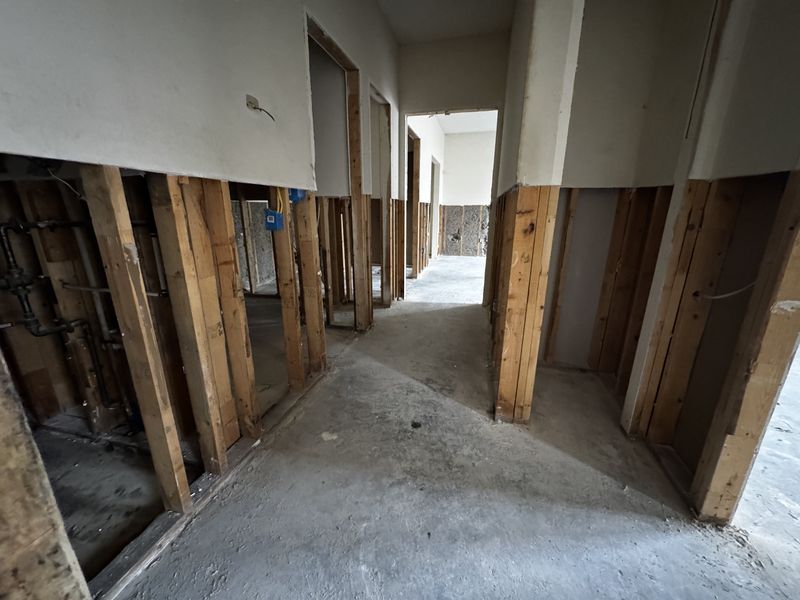
- Inside walls and chases. Wrapped pipe that runs through a closed wall or under a floor.
- Under newer siding. Cement shingle siding with vinyl or steel siding installed over it.
- In crawlspaces and attics. Duct and furnace wrap, or loose-fill insulation that was hard to reach.
- In roofing layers. Old felt and shingles under the roof that's on the house today.
I'm not saying any of these are in your building. I'm saying asbestos found during demolition is nearly always a story about layers, and every remodel that covered something up left a place a survey can miss.
Who Gets Called, and in What Order
- The owner. Same day. You get a call, photos, and a plain description of what we found and where.
- A Missouri-certified asbestos inspector. The inspector samples the material and sends it to an accredited lab. The result comes back as a written supplement to the original report: what the material is, where it is, how much there is, and whether it crumbles.
- A Missouri-registered abatement contractor, if the material is regulated. They price the removal from the inspector's report and do the work with state-certified workers. They handle disposal at a landfill permitted to take it and provide the paperwork that shows where it went.
- Missouri DNR. The abatement contractor files the asbestos project notification for the removal. If the dates on the original demolition notice are going to slip, DNR gets a revised notice too.
On any job with asbestos found during demolition, one thing stays the same through all four steps. ATLAS is a demolition contractor, not an abatement contractor. We don't remove asbestos. We hire the abatement contractor, schedule them, keep their DNR registration and insurance on file, and carry the work under our contract so you still have one point of contact. Then we hold our start until clearance is in hand.
The DNR 10-Working-Day Notice and What It Does to the Schedule
This is the part that turns a bad afternoon into a few bad weeks. Missouri DNR requires asbestos abatement project notifications at least 10 working days before a regulated removal starts. Working days means weekends and state holidays don't count, so 10 working days is two full calendar weeks at the least. The state's asbestos notification page has the current forms and instructions.
DNR notes that alternate notification provisions may apply in emergency situations, and that the way to find out is to contact its Air Pollution Control Program. That decision belongs to DNR. It doesn't belong to us, the abatement contractor, or the owner, and we don't build a schedule on the hope of it.
So when asbestos found during demolition comes back from the lab as regulated, here's the realistic calendar.
| Step | Who Does It | Typical Time |
|---|---|---|
| Stop work, secure the area, call the owner | ATLAS | Same day |
| Sampling and lab results | Missouri-certified inspector | A few days, faster with a rush lab |
| Abatement price from the report | Missouri-registered abatement contractor | A few days |
| DNR project notification window | Filed by the abatement contractor | 10 working days |
| Removal and clearance | Abatement contractor | Usually 1 to 3 days on a house |
| Teardown resumes | ATLAS | Once clearance is in hand |
Add it up and a confirmed find costs roughly three weeks, sometimes four. If the lab says the material is clean, the delay is a few days and the crew goes back to work.
How the Change Order Lands on the Proposal
Our proposal is a fixed price for the work it describes, and it's written from the inspection report. Material that wasn't in the report isn't in the price. That's true for every contractor, whether or not they say it out loud.
What you should expect is that a change order for asbestos found during demolition shows up in writing before the work happens. On our jobs it has:
- The inspector's supplemental sampling. A flat fee, passed through from the inspector.
- The abatement. A fixed price from the abatement contractor, based on the report, as its own line.
- Anything else the stop changes. Listed the same way, in writing, not folded into another number.
The demolition price for the work already described doesn't move. You approve the change order before the abatement gets scheduled.
I'm not going to put a dollar figure on a find I haven't seen. Abatement is priced by the material, the amount, and how hard it is to reach, far more than by the size of the building. In Mid-Missouri it runs from a few hundred dollars for a small amount of floor tile to the low five figures for a commercial building with pipe insulation throughout. The cost table in our post on asbestos inspection before demolition in Missouri breaks the typical ranges down by material.
Who carries the cost: the owner. The material was in the building before any contractor arrived, and the DNR notice goes in the owner's name. That's the best reason there is to find it on the survey, when it's a line on a proposal, instead of on demolition day, when it's a line on a change order plus three weeks.
How a Proper Pre-Demolition Survey Keeps This From Happening
Nearly every case of asbestos found during demolition traces back to a survey that couldn't see something. The fix is to make sure it can.
- Hire a Missouri-certified asbestos inspector. Not a home inspector and not the demolition contractor.
- Tell the inspector the building is coming down. A survey for a teardown has no reason to protect the finishes. The inspector should be free to lift carpet, cut into walls, and look under every layer.
- Give them the whole building. Every room, the attic, the crawlspace, the garage and the outbuildings. Unlocked, emptied out enough to move around in, with the lights still on.
- Tell us what you know. Additions, a second layer of siding, a floor that's been raised, a boiler that used to be in the basement. We note the likely spots on the walkthrough and pass them along.
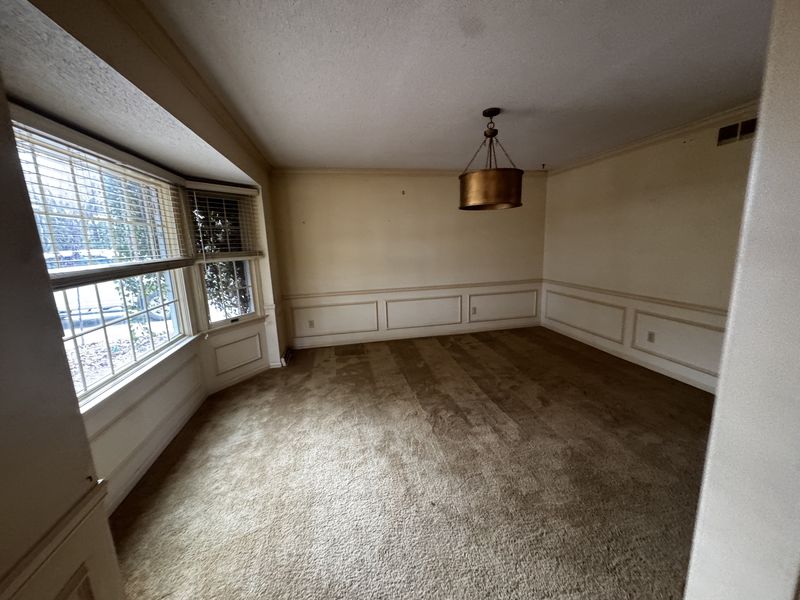
One more point, because it's where a lot of surprises start. A single house that's coming down on its own is generally exempt from the federal rule, so some owners skip the survey. We recommend it anyway on any house built before 1985. A house with no survey is a house where everything is a possible surprise.
Asbestos Found During Demolition in Columbia, Boone County and Mid-Missouri
The rule is the same across Missouri. A few local details make a mid-job find more or less likely.
City of Columbia: the city's demolition permit application doesn't ask for the asbestos report, and the city doesn't check whether DNR has been notified. A valid permit in hand tells you nothing about whether the building was surveyed. Our post on demolition permits in Columbia, MO covers what the city does ask for.
Unincorporated Boone County: the county doesn't issue demolition permits for most structures outside city limits. The DNR rule still applies the same way on a farm outside Hallsville or Harrisburg as it does on a lot in town.
Older housing stock: the pre-1960 homes in Columbia's older neighborhoods, the small-town homes in Centralia, Fulton and Boonville, and farmhouses across Boone, Callaway, Howard and Cooper counties have been remodeled over and over. Those layers are where things hide.
Wherever the building is, the asbestos paperwork goes to DNR in Jefferson City, not to City Hall. We handle demolition in Columbia, MO and about 45 minutes in every direction, and the sequence is the same on all of it.
Tearing Down a Building Old Enough to Have Surprises?
I'll walk it with you, point out where a survey needs to look, and put the whole sequence in writing before anything comes down.
Request a Free Consultation Call (573) 234-6641Frequently Asked Questions
What happens if asbestos is found during demolition in Missouri?
Work stops in that area and the material is left where it is. A Missouri-certified asbestos inspector samples it, and a lab confirms whether it actually contains asbestos. If it does and it's regulated, a Missouri-registered abatement contractor has to remove it before the teardown continues, and that contractor files an asbestos project notification with Missouri DNR ahead of the removal. If the lab says it's clean, the crew goes back to work. Asbestos found during demolition pauses the project. It doesn't end it. On our jobs the owner gets a phone call and photos the same day, and nothing is added to the price without a written change order. ATLAS does not remove asbestos. We arrange the inspector and the abatement contractor under our contract and hold the machine until the building is cleared.
Who pays when asbestos turns up after demolition has started?
The property owner does, the same as if the survey had caught it before the job started. The material was in the building before any contractor showed up, and removing it is part of what it costs to take that building down legally. With asbestos found during demolition, what you should expect from the contractor is that the cost shows up in writing before the work happens. On our jobs it goes on a change order with the inspector's fee and the abatement contractor's fixed price each on its own line, and the demolition price for the work already described doesn't move. Abatement is priced from the inspector's report, by the material and how much of it there is, so nobody is guessing.
How long does asbestos found during demolition delay the project?
If the lab says the material is clean, a few days. If it's regulated, plan on roughly three weeks, sometimes four. Sampling and lab results take a few days, and a rush lab can shorten that. The abatement contractor needs a few days to price the work from the report. Then the contractor's project notification to Missouri DNR normally carries a 10-working-day waiting period, which is two full calendar weeks at the very least. The removal itself is usually one to three days on a house. We don't plan around a waiver of the waiting period, because that decision belongs to DNR.
Can the demolition crew just remove it and keep going?
No. In Missouri, regulated asbestos has to be removed by a contractor registered with the DNR as an asbestos abatement contractor, using state-certified workers. A demolition crew that isn't registered can't legally pull it, bag it, or haul it, and running it through with the rest of the debris is a violation that can land on the property owner. ATLAS is a demolition contractor, not an abatement contractor. When suspect material turns up, we stop, bring in a certified inspector, and if it's regulated, bring in a registered abatement contractor under our contract. Be suspicious of any crew that offers to make the problem disappear that afternoon.
Planning a Teardown in Columbia, MO or Anywhere in Mid-Missouri?
Now you know how asbestos found during demolition plays out. Work stops, a certified inspector samples it, a registered abatement contractor removes it if it's regulated, DNR gets its notice, and the cost lands on a written change order. The better outcome is the one where none of that happens because the survey caught it. ATLAS Demolition & Site Work lines up the inspector, arranges abatement under our contract when a job needs it, and takes the building down behind the clearance. We answer the phone, we show up when we say, and we leave the lot clean.
- Phone: (573) 234-6641
- Email: chris@deployatlas.com
- Online: Request a Free Consultation or send us a message