Single-wides $4,000 to $7,000, double-wides $6,000 to $10,000, demolished in place with the pad graded when we leave.
We demolish mobile homes and manufactured homes in place, haul the debris off, scrap the steel frame and leave a graded pad. A single-wide is a one-day job. A double-wide takes one to two. Chris Kurtz bids every job in person and runs the crew on site. This page covers what mobile home removal costs in Columbia, MO and the rest of Mid-Missouri, what is included, what happens to the frame and the title, and what your lot looks like when we pull out.
A single-wide is 14 to 18 feet wide, 60 to 80 feet long, roughly 700 to 1,100 square feet. One steel chassis, one roof, one pass with the excavator. A double-wide is two of those bolted together at a marriage line, 1,200 to 2,000 square feet, with two chassis and usually twice the add-ons: bigger deck, more skirting, a carport, a shed.
Size sets the base number. Three things move it from there:
There are two ways to get a mobile home off a lot. You can demolish it where it sits, or you can hire a licensed transporter to pull it off intact on its own axles.
We demolish in place. Hauling intact only makes sense when the home is worth moving: newer, structurally sound, still on a chassis with usable axles and hitch, and headed to a buyer or a new lot. Most of the homes we are called about are 1970s to 1990s units with soft floors, roof leaks and a chassis that has been sitting on piers for 30 years. Moving one of those costs more than it is worth, and often more than demolition. If yours is a candidate to move, we will say so at the site visit and point you to a transporter.
Demolition in place goes like this: strip the skirting and add-ons, pull anything that needs to go out separately, then take the box down with the Cat 308 and grapple. Wood, drywall, insulation and siding get loaded and hauled. The steel chassis comes out last.
Every mobile home sits on a steel I-beam chassis with cross-members, outriggers and usually the original axles and hitch. That is 3,000 to 6,000 pounds of scrap on a single-wide, roughly double on a double-wide. We cut it, load it and haul it to a scrap yard. The scrap value comes back to you as a credit on the invoice at the price the yard pays that week. It is not a big number, typically a few hundred dollars, but it is your steel and you get it.
A standard mobile home removal from us covers:
Electric, gas, water and sewer or septic all have to be dead before the excavator arrives. We coordinate the meter pull with the utility, confirm the gas is shut off and capped at the meter or tank, and cap the water line at the curb stop or well. If the home is on a septic tank, the tank gets pumped by a licensed hauler as part of the disconnects, then we cap it or crush and fill it, depending on whether a new home will reuse it. You get a list of what we handle and what needs your signature at the site visit.
A manufactured home in Missouri carries a title through the Department of Revenue, like a vehicle, unless it was previously converted to real estate. When the home is destroyed, the owner surrenders that title so it stops being taxed as personal property. We do not handle the title; you do. What we give you is the demolition letter documenting that the home was destroyed and when. If the home was affixed to the land and the title was already retired through an affidavit of affixation, the paperwork runs through the county instead. Call your county assessor with the title in hand and they will tell you which one applies.
We bid a fixed price for mobilization, equipment and crew. Disposal is billed as a pass-through at the actual loads and tonnage, which runs $40 to $90 per ton in Mid-Missouri depending on the facility. A single-wide generates 15 to 25 tons of debris. A double-wide runs 30 to 45. The steel scrap credit comes off the total.
Typical ranges for the cost to remove a mobile home in our area:
| Item | Typical range | Timeline |
|---|---|---|
| Single-wide demolition and haul-off | $4,000 – $7,000 | 1 day |
| Double-wide demolition and haul-off | $6,000 – $10,000 | 1–2 days |
| Decks, porches, add-ons, carports | $500 – $2,000 | Same day |
| Septic tank pump and cap | $400 – $900 | Before demo day |
| Disposal (pass-through) | $40 – $90 per ton | Billed at actual weight |
| Steel chassis scrap | Credit | Applied to invoice |
Those are typical ranges, not a quote. A site visit gives you a firm number. Chris walks the lot, checks the access and the add-ons, looks at the age of the home and writes it up the same day. Get a written bid or call (573) 234-6641.
We are based in Columbia and work Columbia, Jefferson City, Fulton, Moberly, Fayette, Boonville, Ashland and the rest of Mid-Missouri within about 45 minutes of Columbia. Rural lots in Boone, Callaway, Audrain, Howard and Cooper counties are the bulk of this work: an old trailer behind a farmhouse, a park lot the owner wants cleared, or a family property where the home has sat empty for a decade. We are licensed and insured with general liability, umbrella and workers' comp.
When we pull out, you have a rough-graded pad with no piers, no runners, no skirting trench and no debris. It drains and you can mow it. If you are setting a new manufactured home, we can take it the next step: a compacted gravel pad, cut-and-fill to the new footprint and utility stubs positioned for the new home. That is priced under site work and can go in the same bid.
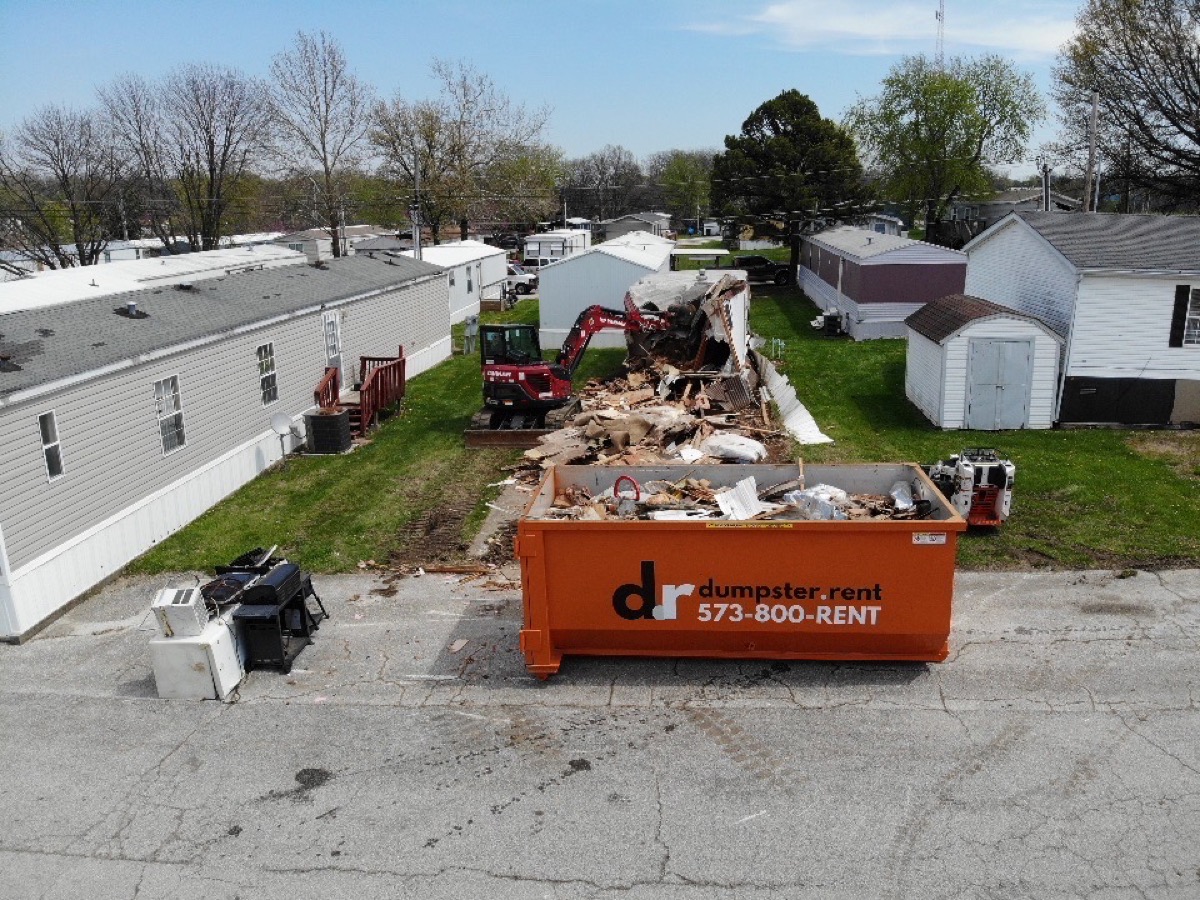
In Mid-Missouri a single-wide runs $4,000 to $7,000 to demolish in place and haul off, and a double-wide runs $6,000 to $10,000. That covers mobilization, equipment and crew at a fixed price. Disposal is billed as a pass-through at actual tonnage, $40 to $90 per ton depending on the facility, and the steel chassis scrap comes back as a credit. Decks, carports and other add-ons add $500 to $2,000. A site visit gives you a firm number for your lot.
Typically $6,000 to $10,000 in Columbia, MO and the surrounding counties. A double-wide is 1,200 to 2,000 square feet with two steel chassis, which means roughly twice the debris of a single-wide, 30 to 45 tons, and usually a bigger deck and more skirting. Plan on one to two days on site. The second chassis also means more scrap steel, so the scrap credit is larger. Contents left inside, asbestos-containing materials or a tight lot push the number toward the top of the range.
No. We demolish the home in place and haul the debris off in loads. Hauling a home intact requires a licensed transporter with a toter truck, usable axles and hitch on the home, and a home worth moving. Most of the homes we remove are 1970s to 1990s units with soft floors and roof damage, and moving one of those costs more than demolition. If your home is newer and sound, we will tell you at the site visit and refer you to a transporter.
The steel I-beam chassis, cross-members, axles and hitch come out last. We cut the frame into sections, load it and haul it to a scrap yard. A single-wide chassis is roughly 3,000 to 6,000 pounds of steel; a double-wide has two. The scrap yard pays by weight at that week's price, and that amount is credited on your invoice. It is usually a few hundred dollars, not thousands, but it is your steel and it comes off your bill.
Inside Columbia city limits, yes. Building and Site Development issues the demolition permit, and it requires utility disconnect confirmations and a DNR asbestos inspection. Outside city limits, Boone County Resource Management handles it, and the requirements are lighter but utilities still have to be disconnected and the DNR inspection still applies to most structures. We pull the permit and schedule the inspection as part of the job. Our post on demolition permits in Columbia walks through the steps.
We coordinate all of them before demo day. The electric meter is pulled by the utility, gas is shut off and capped at the meter or tank, and water is capped at the curb stop or well. If the home is on a septic tank, we arrange for a licensed hauler to pump it, then we cap it or crush and fill it, depending on whether a new home will reuse it. Some disconnects need the owner's signature on the utility's form; we tell you which ones at the site visit.
One day for a single-wide, one to two days for a double-wide. That is demolition, loading, hauling and the rough grade. The part that takes longer is what comes before: utility disconnects and the DNR asbestos inspection usually take one to two weeks to line up, and if regulated asbestos material is found, Missouri requires a 10-working-day notice before abatement starts. From the site visit to a cleared lot, plan on two to four weeks on a typical job.
A rough-graded pad. Piers, footings, runners, skirting and all debris are gone, and the pad is graded to drain so you can mow it or leave it. If you are setting a new manufactured home, we can add a compacted gravel pad, cut-and-fill to the new footprint and utility stubs positioned for the new home. That is a separate line under site work and can be folded into the same bid.
Tell us what you need torn out or put back. We'll walk the site and send a written bid.
Get a Written Bid