The inspection, the abatement and the DNR notice, arranged under the same contract as the teardown. One schedule, one invoice.
Most buildings in Mid-Missouri that are old enough to tear down are old enough to have asbestos in them. Floor tile and mastic, pipe insulation, siding, roofing, drywall compound, mobile home ceilings and underlayment. Missouri requires an inspection before demolition, and if the inspector finds regulated material, it has to come out before the excavator shows up. We handle that whole sequence as part of the job. The inspection, the abatement and the state notice are arranged under our contract, performed by a Missouri-registered abatement contractor, scheduled around the teardown, and billed on one invoice.
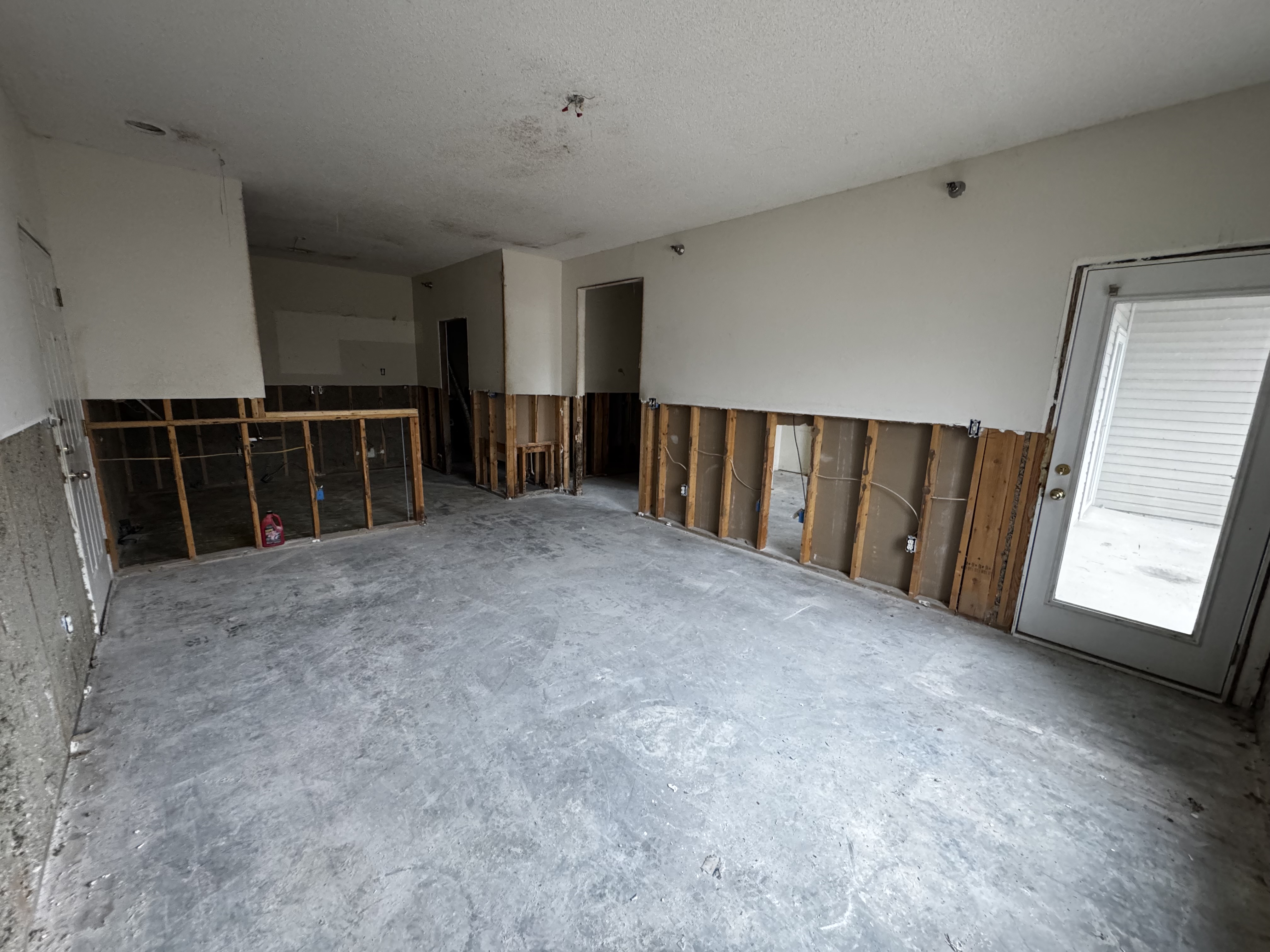
Missouri DNR requires an asbestos inspection by a licensed inspector before most demolitions, residential included when the structure is being torn down rather than renovated. Columbia and Boone County will not issue a demolition permit without it. If the inspection finds regulated asbestos-containing material, two things happen before anyone touches the building: a registered abatement contractor removes the material, and DNR gets a 10-working-day notification. Skip either one and the job stops, the owner carries the liability, and the fines are real.
The buildings we see it in most: anything built before 1980, mobile homes from the 1970s and 1980s, commercial buildings with vinyl floor tile over black mastic, farmhouses with transite siding, and boiler rooms with wrapped pipe. It is not a reason to panic. It is a line item and a few days on the schedule, as long as it's planned.
The inspection is a flat fee from the inspector, typically a few hundred dollars for a house and more for a commercial building with many materials to sample. Abatement is priced by the abatement contractor from the inspection report, based on what the material is, how much there is, and how hard it is to reach. It sits on our proposal as its own line, marked up like any subcontracted work, with the demolition priced separately below it. Ranges in Mid-Missouri run from a few hundred dollars for a small amount of floor tile to the low five figures for a commercial building with pipe insulation throughout. We don't publish a per-square-foot number because the material drives the price more than the area does. The site visit and the inspection report together get you a firm number before anything is removed.
| Item | How it's billed |
|---|---|
| Asbestos inspection and report | Flat fee, passed through from the inspector |
| Abatement | Fixed price from the report, as a line on our proposal |
| Demolition, haul and disposal | Fixed price for labor and equipment; disposal at actual tonnage |
| Site restoration | Priced separately if you want it |
On a commercial job the asbestos is usually in the flooring, the ceiling tile, the pipe and duct insulation, and the roofing. We sequence abatement ahead of the strip-out or selective demolition so the crew is never working around regulated material, and we can phase it floor by floor in an occupied building. The abatement contractor's clearance is in your close-out file, which matters when the property changes hands.
Mobile homes built before the mid-1980s often have asbestos in the ceiling texture, floor underlayment and furnace components. The inspection is required before mobile home removal the same as any other structure, and the abatement is usually small and quick. Budget a few days for it in the schedule.
Tell us the building's age and what you know about it. We'll line up the inspection and put the full sequence in writing. Request a free consultation or call (573) 234-6641.
Columbia, Jefferson City, Fulton, Moberly, Fayette, Boonville, Ashland and the rest of Mid-Missouri within about 45 minutes of Columbia.
Almost always. Missouri DNR requires a licensed asbestos inspector to survey the structure before demolition, and Columbia, Boone County and the surrounding jurisdictions won't issue a demolition permit without the report. The rule applies to houses and mobile homes being torn down, not just commercial buildings. The inspection takes a few days to schedule and sample, and it either clears the building or tells us exactly what has to come out first.
No. Abatement in Missouri has to be performed by a contractor registered with the DNR Asbestos Program, with licensed workers and supervisors. We hire that contractor, schedule the work, keep their registration and insurance on file, and carry it on our contract and our invoice. You get one proposal and one point of contact, and the abatement is done by the people the state licenses to do it.
It depends on the material more than the size of the building. A small amount of floor tile or a few feet of pipe wrap can be a few hundred dollars. A commercial building with insulation throughout or a house with transite siding runs into the thousands, sometimes the low five figures. The inspection report is what the abatement contractor prices from, so we never guess. The number goes on the proposal as its own line, with the demolition priced separately.
Plan on two to three weeks between the inspection and the first day of demolition when regulated material is found. The inspection takes a few days, the abatement crew needs a 10-working-day DNR notification before they start, and the removal itself is usually one to three days on a house. We build all of it into the schedule up front so the demolition date is real.
Then the abatement line comes off the proposal and we move straight to disconnects, permit and teardown. You still pay the inspector's flat fee, because the report is required to pull the permit either way. A clean report is common on newer buildings and on older ones that were renovated after the 1980s.
That's not work we take. If you need tile or insulation removed from a building that's staying, with no demolition attached, you're better off hiring an abatement contractor directly, and we'll give you the names we use. Our abatement work is the front half of a teardown or a strip-out, under our contract, so the whole job has one schedule and one invoice.
Yes, before it's demolished. Mobile homes from the 1970s and early 1980s commonly have asbestos in the ceiling texture, the floor underlayment and furnace parts. The inspection is required the same as for a house, the abatement is usually small, and we schedule it ahead of the removal so the crew never handles regulated material.
The abatement contractor files the 10-working-day asbestos notification with Missouri DNR for the removal, and the demolition notification is filed before we start the teardown. Both are built into our schedule. You don't file anything, and the clearance paperwork lands in your close-out file when the job is done.
Most built before 1990 do, somewhere. We'll get it inspected, tell you what it means for the job, and put the whole sequence in writing.
