
"We can't close for two weeks. Can you do it while we're open?" is the first thing I hear from nearly every property manager, pastor and business owner who calls about a failing lot around Columbia. Short answer: yes. You do it in sections, with a parking lot replacement phasing plan drawn before anything gets torn out. I'm Chris Kurtz, owner of ATLAS Demolition & Site Work in Columbia, MO. Here's how phasing works, what stays open, how long each section is down, and what it does to the price.
Quick Answer: Parking lot replacement phasing means tearing out and rebuilding a lot in two or three sections instead of all at once, so the entrance, the front rows and the accessible stalls stay open the whole time. Each asphalt phase is closed about a week. Each concrete phase is closed closer to two weeks because of cure time. A 15,000 square foot lot in Columbia, MO takes 2 to 3 weeks in asphalt and 3 to 4 weeks in concrete, start to finish. Churches get worked Monday through Friday and reopened for Sunday. Restaurants and busy retail can get removal at night. Phasing adds a little cost for extra trips and temporary striping, and it's almost always cheaper than closing.
In This Guide:
What Phasing a Parking Lot Replacement Actually Means
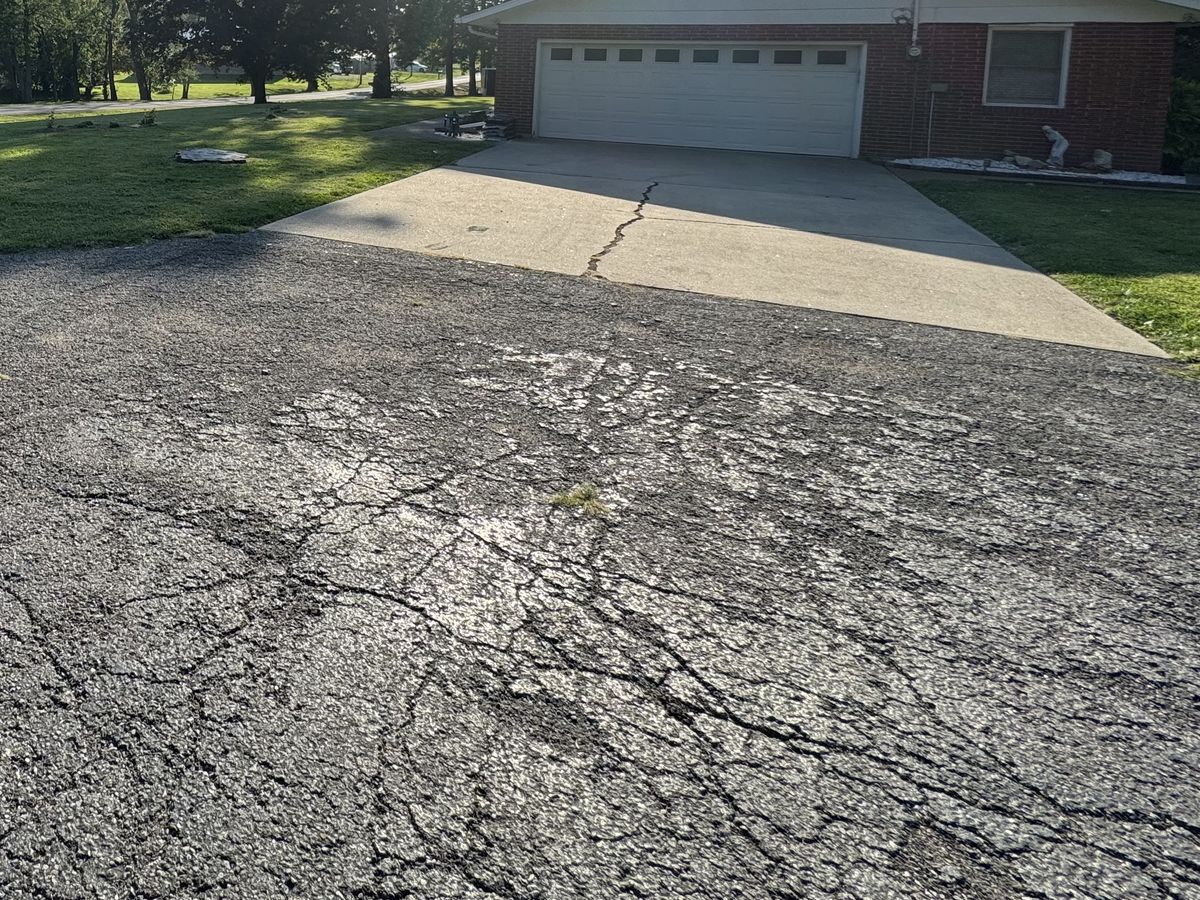
A full replacement takes the lot down to the dirt. The old surface comes out, the base rock gets fixed or rebuilt, the grade gets corrected so water leaves, and a new surface goes down. Done all at once, that's weeks with no parking at all, and most owners can't live with that.
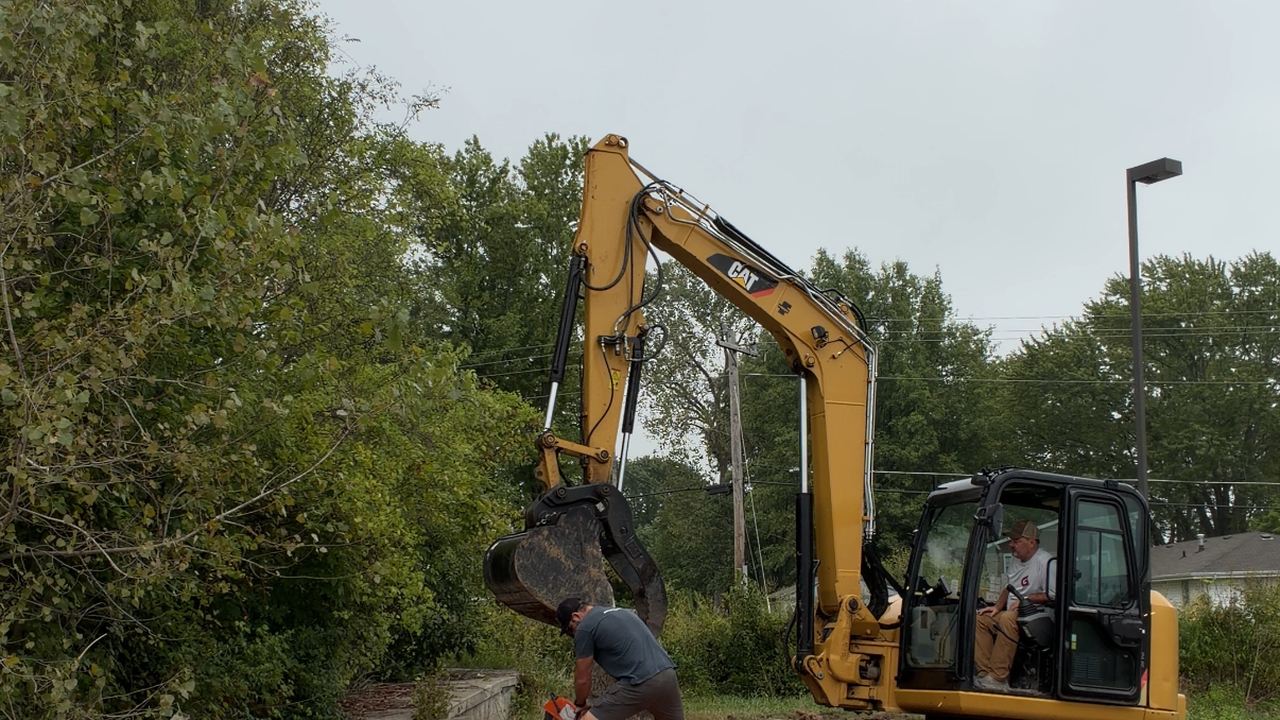
On our parking lot removal and replacement jobs, the lot gets split into two or three sections. One section closes. The others stay open with temporary striping. When the first section is rebuilt and open to traffic, the cones move and the next one closes. The removal is our excavator and our trucks. The new surface is our concrete or asphalt crew under our contract and warranty, so one company owns the schedule from the first saw cut to the last stripe.
Each phase runs the same way:
- Saw-cut the phase line. A clean cut keeps the open side intact.
- Remove. Break or mill the old surface and haul it to the recycler.
- Read the base. Soft spots get dug out and replaced with compacted rock.
- Grade and drain. The rock gets shaped so water leaves the lot.
- Surface and cure. Asphalt is paved or concrete is poured.
- Open and move. The barricades shift and the next phase starts.
How We Draw a Parking Lot Replacement Phasing Plan
Parking lot replacement phasing starts with a walk, not a drawing. I count stalls, find the low spots, open a test hole in the base, and then ask the question that matters most: how does this property actually get used? A lot that's full at noon on Tuesday gets a different plan than one that's full at 10 a.m. on Sunday.
Then the phases get drawn on a map of the lot. These are the things that decide where the lines go:
- Entrances. A lot with two drives is easy. Close one, use the other, swap. A lot with one drive means that entrance gets rebuilt in halves, or over a night or a weekend.
- The front door. The rows closest to the building matter most to your customers, so they're closed for the shortest time and never during your peak.
- Deliveries and trash. The dumpster pad, the loading door and the route a delivery truck takes all need a way in and out during every phase.
- Fire lane. It stays passable.
- Drainage. Water has to have somewhere to go between phases, so we don't leave a finished section draining onto an open subgrade.
You get the map with the proposal. Each phase is labeled with what's closed, what's open, how many stalls you have, and how many days it lasts.
What Stays Open During Every Phase
Good parking lot replacement phasing is mostly about what you don't close. On every phase, these stay working:
- A way in and a way out. At least one entrance, with a drive lane wide enough for two cars to pass or a clearly signed one-way loop.
- Accessible parking and a route to the door. Accessible stalls stay available on every phase, with a firm, clear path to the entrance. If the permanent ones are in the closed section, temporary ones go in first. When the lot is restriped at the end, federal guidance on restriping parking spaces requires the accessible stalls to meet the current ADA standards, and we lay that out on the plan.
- A safe walk from car to building. Customers shouldn't have to cut through a work zone. Cones, barricades and signs mark the route.
- Temporary striping and signs. The open section gets striped so it parks efficiently, with signs at the entrance telling drivers where to go.
The stall math: on a two-phase plan you have about half your stalls on any day. On a three-phase plan you have about two-thirds. If the lot is full every day at lunch, that's the difference between two phases and three.
Phasing by Property Type
The work is the same on every lot. The schedule isn't. Here's how parking lot replacement phasing usually bends around the building.
| Property | What Can't Be Interrupted | How We Phase It |
|---|---|---|
| Church | Sunday services, midweek events, funerals | Work Monday through Friday, cleared out and open for Sunday. Front rows and accessible stalls turned around fastest |
| Restaurant or busy retail | Lunch and dinner rush, weekends | Removal overnight or early morning, back rows first, entrance rebuilt in halves |
| Medical or professional office | Accessible stalls by the door, patient drop-off | Front row last and shortest. Temporary accessible stalls set before the permanent ones close |
| Apartment complex | Residents' assigned parking, trash day | Phased by building so nobody loses a spot for more than a day or two. Notices go out ahead of each phase |
If the first question is still whether the lot needs to come out at all, start with our post on parking lot replacement vs repair. Phasing only matters once the base has made that decision for you.
How Long Each Phase Takes
The surface you pick sets the pace. Asphalt can take cars the day after it's paved. Concrete needs about 7 days of cure before cars and closer to 28 days before trucks, dumpster service and heavy deliveries. On a busy lot, that cure time is often what decides the surface, and our post on asphalt vs concrete parking lots walks through the rest of that choice.
| Step | Asphalt Phase | Concrete Phase |
|---|---|---|
| Removal and haul | 2 to 5 days | 2 to 5 days |
| Base and grade | 1 to 2 days | 1 to 2 days |
| Surface | Paved in a day | Formed and poured in 1 to 2 days |
| Before cars | Open the next day | About 7 days of cure |
| Whole lot, 15,000 sq ft | 2 to 3 weeks | 3 to 4 weeks |
Concrete changes parking lot replacement phasing in one more way. Because a poured section sits closed for a week, the phases overlap. We're tearing out phase two while phase one cures, which keeps the calendar from stretching.
What Phasing Does to the Price
Parking lot replacement phasing isn't free, and I'd rather show you the number than hide it. Every extra phase is another trip for the paving or concrete crew, another set of saw cuts, and another round of temporary striping, cones and signs. Night or weekend work costs more than day work. All of it shows up as its own line on the proposal, so you can compare a two-phase plan to a three-phase plan and decide what an open front row is worth.
What it doesn't change is the big number. A 15,000 square foot asphalt lot, about 40 spaces, runs $60,000 to $150,000 removed and repaved around Mid-Missouri, and nearly all of that swing is the base. Our post on parking lot removal cost in Missouri breaks the tear-out half down line by line.
Timing a Phased Replacement in Columbia and Mid-Missouri
Two local facts shape the schedule here. The first is the calendar. Asphalt plants in this part of the state run roughly April through November, so a lot that's torn out and repaved in one pass has to land in that window. Removal and base work can happen all winter, and some owners tear out a back section in January to be first on the paving schedule in spring.
The second is the clay. The ground under Columbia, Jefferson City, Fulton and Moberly holds water, and an open subgrade after a week of rain is soft. That's a reason to keep phases small enough to close up quickly. Drainage gets corrected one phase at a time as part of our grading and base work, so each finished section sheds water before the next one opens up.
We handle concrete and paving work across Boone County and anywhere within about 45 minutes of Columbia, and a parking lot replacement phasing plan for a church in Ashland looks a lot like one for a strip center on the Business Loop.
Want to See Your Lot Drawn in Phases?
Send the address, a rough space count, and your busiest days. I'll walk it, test the base, and send a phased, fixed-price proposal with the map.
Request a Free Consultation Call (573) 234-6641Frequently Asked Questions
Can my business stay open during a parking lot replacement?
Yes, and on almost every lot we replace it does. We split the lot into two or three sections, keep the entrance and the front rows open, and put down temporary striping so the open section works like a smaller version of the whole lot. The closed section gets fenced off with cones and barricades so nobody drives onto fresh base or wet concrete. You'll have fewer stalls for a few weeks, and on the tightest days customers may park a little farther from the door. What you won't have is a locked gate. Tell us your busiest days and hours on the first walk, and the parking lot replacement phasing plan gets built around them.
How many phases does a parking lot replacement need?
Most lots between 5,000 and 60,000 square feet are done in two or three phases. Two phases is the simplest parking lot replacement phasing plan: half the lot closed, half open, then swap. Three phases makes sense when the lot has a single entrance that has to be rebuilt in halves, when a tenant can't lose more than a third of the stalls at once, or when concrete cure time would keep one big section closed too long. More phases keep more stalls open on any given day, but each one adds a mobilization for the paving or concrete crew and another construction joint. We draw it both ways when the choice isn't obvious.
How long is each section of the lot closed?
For asphalt, plan on about a week per phase. Removal takes 2 to 5 days depending on the size of the section, base work takes 1 to 2 days, paving takes a day, and the section opens the next day. For concrete, add the cure. The pour needs about 7 days before cars and closer to 28 days before trucks, dumpster service and heavy deliveries, so a concrete phase is closed closer to two weeks. Start to finish, a 15,000 square foot lot runs 2 to 3 weeks in asphalt and 3 to 4 weeks in concrete, with part of the lot open the whole time.
Does phasing a parking lot replacement cost more?
A little. Every phase means another trip for the paving or concrete crew, another set of saw cuts, and another round of temporary striping, cones and signs. It shows up as its own line on our proposal so you can see exactly what it adds. For most commercial owners it's still far cheaper than closing for two weeks. The base is the thing that moves the price of a lot replacement, not the phasing. A 15,000 square foot asphalt lot removed and repaved runs $60,000 to $150,000 around Mid-Missouri, and almost all of that swing comes from what we find under the surface.
What happens to the handicap parking during construction?
It stays available. On every phase we keep accessible stalls and a clear, firm route from those stalls to the door. When the permanent accessible stalls are inside the section being torn out, we set up temporary ones as close to the entrance as the open section allows, with signs, before the old ones close. A medical office or a church with older members usually gets the front row phased last and turned around fastest. When the new lot is striped, the accessible stalls, access aisles, ramps and signs are laid out to the current ADA standard, so a lot that was short on accessible spaces gets fixed.
Need a Lot Replaced in Columbia, MO Without Closing?
That's the whole idea behind parking lot replacement phasing. The lot gets rebuilt from the base up, and your customers, tenants or congregation keep parking while it happens. ATLAS Demolition & Site Work removes and replaces asphalt and concrete lots for property managers, churches, schools, restaurants and strip centers across Columbia, Jefferson City, Fulton, Moberly and the rest of Mid-Missouri. We answer the phone, we show up when we say, and the plan you approve is the plan we run.
- Phone: (573) 234-6641
- Email: chris@deployatlas.com
- Online: Request a Free Consultation or send us a message