
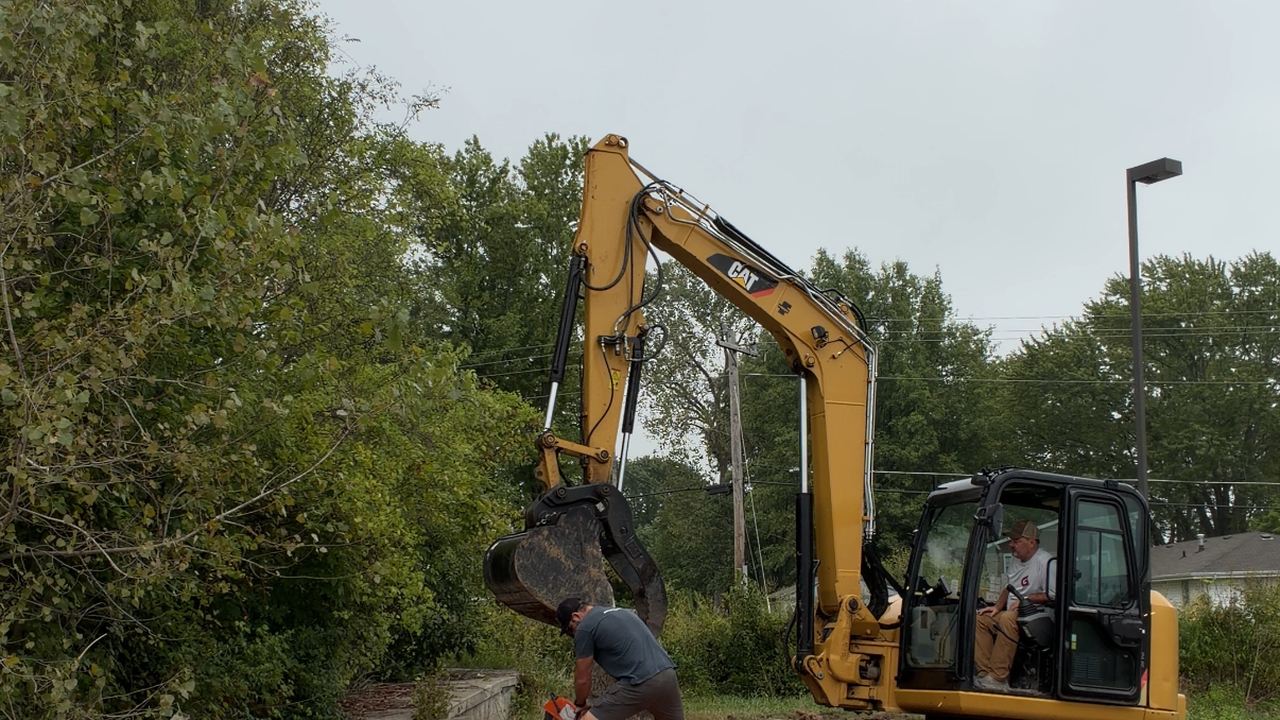
If you're weighing an asphalt vs concrete parking lot for a property in Mid-Missouri, here's the short version: asphalt costs about half as much up front and lasts 15 to 20 years with upkeep. Concrete costs roughly double, lasts 30 years or more, and mostly gets left alone. I'm Chris Kurtz, owner of ATLAS Demolition & Site Work in Columbia, MO. We tear out and replace both kinds of lot for churches, strip centers, apartment complexes, and property managers, so what follows is what we've seen come out of the ground, not a brochure.
Quick Answer: In the asphalt vs concrete parking lot decision, asphalt wins on up-front cost ($4 to $8 per square foot installed in 2026) and concrete wins on lifespan and 30-year cost ($9 to $17 per square foot installed, with far less maintenance). Pick asphalt if budget, a short holding period, or a tight reopening schedule drives the decision. Pick concrete for truck lanes, dumpster pads, drive-through lanes, and lots you'll own for decades. Either way, the base under the surface decides how long the lot lasts in Boone County clay.
In This Guide:
Asphalt vs Concrete Parking Lot Cost in 2026
Here's what the two surfaces run in Columbia, Jefferson City, Fulton, Moberly, and the rest of Mid-Missouri this year. These are installed numbers over a base that's been checked and repaired, because that's the only way we'll build a lot. The tear-out of the old surface is a separate line on the same proposal, and I covered those numbers in our parking lot removal cost guide.
| Item | Asphalt | Concrete |
|---|---|---|
| New surface, installed over prepared base | $4 to $8 per sq ft (3 in. hot mix) | $9 to $17 per sq ft (6 in. reinforced) |
| 15,000 sq ft lot (about 40 spaces), torn out and replaced | $60,000 to $120,000 | $140,000 to $250,000 |
| Sealcoating | $0.15 to $0.30 per sq ft every 3 to 5 years | Not needed |
| Crack and joint sealing | Yearly, $1 to $3 per linear ft | Every 5 to 10 years, $2 to $5 per linear ft |
| Mid-life fix | Overlay at year 12 to 18, $2 to $4 per sq ft | Panel replacement as needed, $12 to $20 per sq ft of panel |
| Expected life, proper base | 15 to 20 years | 30 to 40 years |
The up-front gap is the number everyone sees in an asphalt vs concrete parking lot bid, and it's real. On a 40-space lot, concrete costs $80,000 to $130,000 more on the day the check clears. What that number doesn't show is the sealcoating truck that comes back to an asphalt lot every 4 years, the crack sealing every spring, and the overlay somewhere around year 15. Add 30 years of that up and the two surfaces land closer than the first bid suggests. On some lots concrete comes out cheaper over the long run. On others, especially ones that will be reconfigured or sold inside a decade, asphalt wins both ways.
Asphalt vs Concrete Parking Lot Lifespan Around Columbia
The lifespan numbers above assume one thing: the base was built right. I'll say more about that below, because it's the part that actually decides the asphalt vs concrete parking lot question in this part of the state.
Asphalt. A 3-inch hot mix lot on 6 to 8 inches of compacted rock, sealcoated on schedule and crack-sealed every year, gives you 15 to 20 years before it needs an overlay or a full replacement. Skip the sealcoating and that drops to 10 to 12. The surface oxidizes, goes gray and brittle, and starts to ravel. Water gets in, and in Mid-Missouri water in a crack in November means a bigger crack by March.
Concrete. A 6-inch reinforced slab on a good base lasts 30 to 40 years with joint sealing and the occasional panel swap. We've torn out concrete lots from the 1980s that were still structurally fine and only came out because the owner was rebuilding the whole site. We've also torn out concrete lots from the 2000s that were heaved, cracked in every panel, and dangerous to walk across. The difference was never the concrete. It was what was under it.
The lots we take out at 10 or 12 years, asphalt or concrete, almost never failed from the top down. They failed from the bottom up. Thin rock over clay, no drainage, water under the slab, and the surface broke up from below. A cheap surface on a good base outlasts a premium surface on a bad one, every time.
Maintenance: What Each Surface Costs After It's Built
This is where the asphalt vs concrete parking lot comparison flips for a lot of owners. Asphalt is cheaper to build and more expensive to own. Concrete is the reverse.
Asphalt upkeep. Plan on sealcoating every 3 to 5 years at $0.15 to $0.30 per square foot, which on a 15,000 square foot lot is $2,250 to $4,500 each time, plus restriping while the sealer is fresh. Crack sealing is a yearly chore at a few hundred to a couple thousand dollars depending on how the lot is doing. Potholes get patched as they show up. Somewhere between year 12 and 18, the lot needs a mill-and-overlay at $2 to $4 per square foot, which buys another 10 to 12 years if the base is still sound. Over 30 years, a well-kept asphalt lot gets built once, overlaid once, and sealed 7 or 8 times.
Concrete upkeep. Joint sealing every 5 to 10 years keeps water out of the control joints, and that's most of it. Restriping every 5 to 7 years, same as any lot. The expensive item is a cracked or heaved panel, which has to be saw-cut, broken out, and poured back at $12 to $20 per square foot of panel. On a lot with a good base you might replace 2 or 3 panels in 30 years. On a lot with a bad base you'll replace a lot more, and that's where concrete gets painful, because every fix is a concrete fix.
One more thing on maintenance. A sealcoated asphalt lot looks new every few years. A concrete lot looks like a 15-year-old concrete lot at 15 years. If curb appeal matters for tenants or a sale, that's a point for asphalt that doesn't show up on a spreadsheet.
What Mid-Missouri Clay and Freeze-Thaw Do to Asphalt and Concrete
National comparisons tell you asphalt is better for cold climates and concrete is better for hot ones. Boone, Callaway, and Cole counties get both, plus clay soil that swells when it's wet and shrinks when it's dry. Here's what that means on a real lot.
Freeze-thaw and ground movement. We get 40 to 60 freeze-thaw cycles in a normal winter. Water in the base freezes, expands, and lifts the surface. Then it thaws and the surface drops. Asphalt flexes with that movement and shows the damage as cracks you can seal in the spring. Concrete is rigid, so the same movement shows up as a cracked panel or a panel that's heaved an inch above its neighbor, and that's a trip hazard you can't seal your way out of. On an asphalt vs concrete parking lot built over clay with a thin base, asphalt is more forgiving of the mistake. Concrete punishes it.
De-icing salt. Salt doesn't hurt asphalt. It scales concrete, especially concrete that was poured late in the season, finished wet, or poured without air entrainment. We see 5-year-old concrete lots around Columbia with the top quarter inch flaking off in the drive lanes from salt. A good concrete contractor controls for this. A cheap one doesn't.
Summer heat and trucks. This is where concrete earns its keep. Asphalt softens above 90 degrees. Put a loaded dumpster truck on it in July, turning its wheels in the same spot every Tuesday, and you get ruts and shoving within a few years. Concrete doesn't care. Same with delivery trucks at a loading door, buses at a church entrance, and the drive-through lane at a coffee shop where cars sit with the engine running. Any place heavy or slow traffic concentrates, concrete lasts and asphalt doesn't.
Drainage. Both surfaces need the lot to shed water, and both fail if it doesn't. The asphalt vs concrete parking lot comparison doesn't change that. Flat lots in Mid-Missouri hold water, water finds the base, and the base turns to mud. We grade for a 1 to 2 percent fall on every lot we build and we put the catch basins where the water actually wants to go, which is sometimes not where the old plan had them.
When to Choose Asphalt and When to Choose Concrete
Here's how I walk an owner through the asphalt vs concrete parking lot choice on site. These are the questions that decide most lots.
Asphalt is the right call when:
- Budget is the constraint. If the difference between $90,000 and $180,000 is the difference between doing the lot this year and doing it never, asphalt it is. A new asphalt lot on a good base is a good lot.
- You're holding the property less than 10 years. You won't be around for the maintenance that makes concrete pay off.
- You can't close. Asphalt opens to cars the next day. A restaurant, retail strip, or clinic that can't lose a week of parking usually goes asphalt for the reopening speed alone.
- The lot might change. If you're adding a building, moving an entrance, or reconfiguring stalls in a few years, asphalt is cheap to cut and patch. Concrete isn't.
- It's mostly cars. Apartment complexes, churches, offices, and small retail with passenger car traffic do fine on asphalt for 20 years.
Concrete is the right call when:
- Trucks use it. Loading docks, dumpster pads, truck routes through the lot, and anywhere a bus or box truck parks or turns.
- Traffic sits still. Drive-through lanes, drop-off loops, and gas station aprons. Idling cars and turning wheels chew up asphalt.
- You're keeping it for 30 years. Institutional owners, churches that own their building outright, and family-owned commercial property where the next generation will still be parking there.
- You want to stop thinking about it. No sealcoating contracts, no spring crack sealing, no overlay in 15 years. Build it right once and restripe it occasionally.
- Heat and reflectivity matter. Concrete stays cooler and reflects light, which some owners want for a lot that sits in full sun or needs fewer light poles.
Not Sure Which Surface Fits Your Lot?
Send the address and tell me how you use the lot. We'll walk it, check the base, and price it both ways on one proposal so you can see the real difference.
Request a Free Consultation Or Call (573) 234-6641The Hybrid Lot: Asphalt Where Cars Park, Concrete Where It Counts
Most of the lots we build in Mid-Missouri aren't all one or the other. The answer to asphalt vs concrete parking lot for a lot of owners is both, in the right places. Asphalt for the stalls and drive aisles where passenger cars park, and concrete where the loads concentrate.
- Dumpster pads. A 12 by 20 foot concrete pad, 8 inches thick, where the dumpster sits and the truck's front wheels land when it lifts. This is the single most common asphalt failure we repair, and a concrete pad fixes it for good.
- Truck lanes and loading areas. The route from the street to the loading door, poured in concrete, with asphalt everywhere else.
- Drive-through lanes. Idling cars in a line, every day, in the same wheel paths. Concrete.
- Entrance aprons. The first 20 to 30 feet off the street, where cars brake, turn, and where the city plow blade catches the edge. Concrete holds the edge.
- Drainage swales and curb lines. Concrete valley gutters and curb and gutter carry water without raveling the way asphalt edges do.
- ADA stalls and access routes. Concrete holds the flat grade the code requires and doesn't rut under a van lift.
A hybrid lot usually lands 10 to 20 percent above an all-asphalt price and well under an all-concrete one. It's how we build most church and retail lots around Columbia, and it's what we recommend unless there's a reason to go all one way.
What Matters More Than the Surface: The Base
I've said it three times already because it's true three times over. The asphalt vs concrete parking lot decision gets all the attention, and the base gets none, and the base is what decides whether you get 10 years or 30 out of either one.
A proper base in Mid-Missouri is 6 to 8 inches of compacted crushed rock over subgrade that's been proof-rolled with a loaded truck to find the soft spots. Where the clay pumps under the truck, it gets dug out and replaced with rock, or stabilized, or both. Under concrete we often add geotextile fabric between the clay and the rock so the fines don't migrate up. Under asphalt on a lot that's always been wet, we add underdrains at the low side. None of that is expensive compared to the surface, and all of it is cheaper than doing the lot twice.
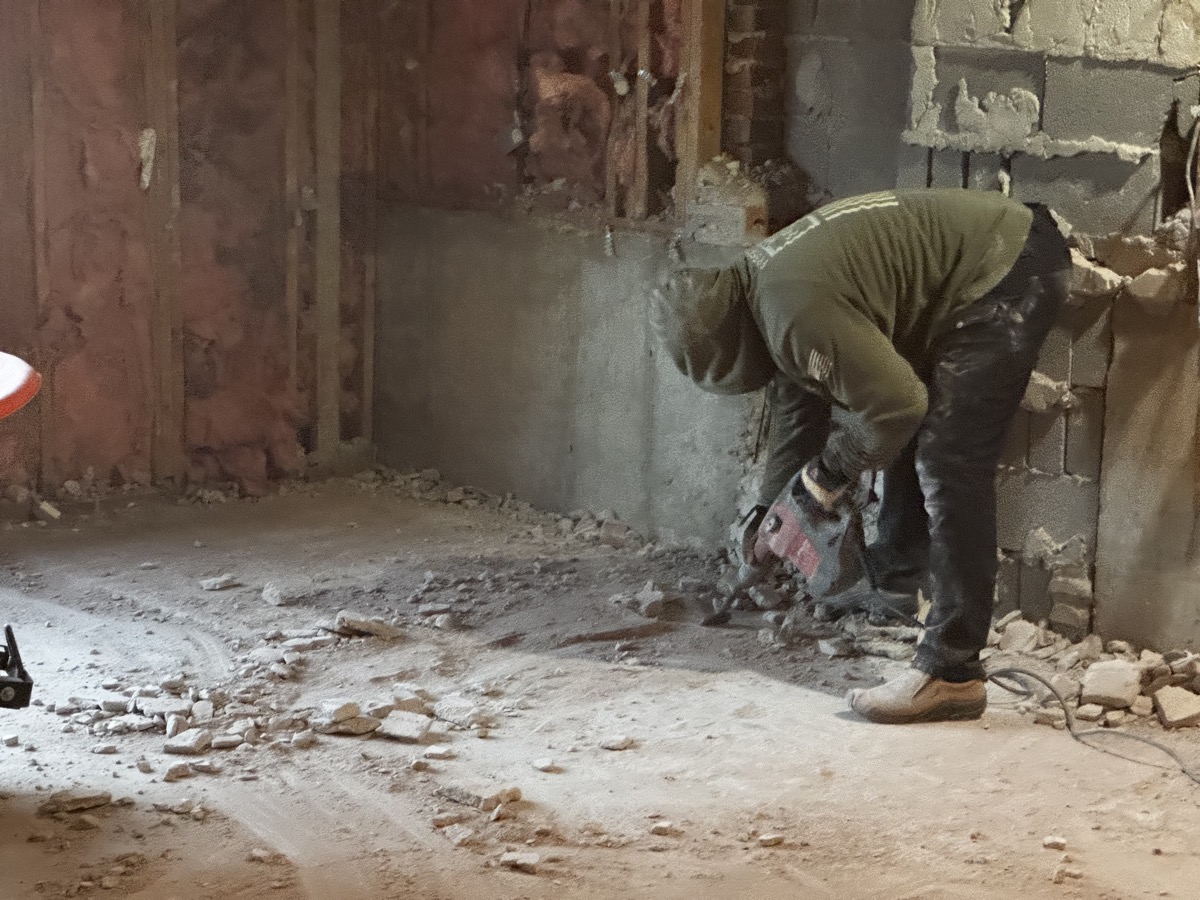
When we tear out an old lot through our parking lot removal and replacement service, the base is the first thing we look at once the surface is gone. If it's sound, we regrade it, add rock where it's thin, and pave. If it's failed, that's a conversation before anything new goes down, and the site work to fix it goes on the proposal as its own line so you can see what you're paying for. Smaller sections, like a dumpster pad or a cracked approach, run through our concrete removal service at per-foot pricing.
Inside Columbia city limits, a full lot rebuild that disturbs more than an acre or changes how the site drains can trigger a land disturbance permit and stormwater review. Current requirements are on the City of Columbia permits page. Most replace-in-kind jobs under an acre don't need one, but we check before we start, and we handle it when it's required.
We build and rebuild lots across Columbia, Jefferson City, Fulton, Moberly, Fayette, Boonville, Ashland, and anywhere within about 45 minutes of Columbia. Asphalt plants in this part of the state run roughly April through November, so if you want an asphalt lot torn out and repaved in one pass, that's the window. Concrete pours into early December in a mild year. Removal and base work can happen all winter, and some owners tear out in January to be first on the paving schedule in April.
Frequently Asked Questions
Is asphalt or concrete cheaper for a parking lot?
Asphalt is cheaper up front, usually by about half, which is where the asphalt vs concrete parking lot question starts for most owners. In Mid-Missouri in 2026, a new asphalt lot runs $4 to $8 per square foot installed over a proper base, and a reinforced concrete lot runs $9 to $17. On a 15,000 square foot lot that's roughly $60,000 to $120,000 for asphalt versus $140,000 to $250,000 for concrete, including tearing out the old lot. Over 30 years the gap closes, because asphalt needs sealcoating every 3 to 5 years and an overlay or full replacement around year 15 to 20, while concrete mostly needs joint sealing and the occasional panel. If you're holding the property less than 10 years, asphalt is almost always the better spend. If you're holding it for decades, run both numbers.
How long does an asphalt parking lot last compared to concrete?
Around Columbia, MO, an asphalt lot that gets sealcoated and crack-sealed on schedule lasts 15 to 20 years before it needs an overlay or replacement. A concrete lot on a sound base lasts 30 to 40 years. Both numbers assume the base underneath was built right, and that's true on either side of the asphalt vs concrete parking lot debate. The lots we tear out at 10 or 12 years almost never failed because of the surface. They failed because the rock base was too thin over clay, water got under it, and the surface broke up from below. A thin asphalt lot on a bad base dies early. A concrete lot on a bad base cracks and heaves, and concrete is a lot more expensive to fix than asphalt.
Which holds up better to freeze-thaw, asphalt or concrete?
In an asphalt vs concrete parking lot over clay, asphalt handles freeze-thaw movement better because it flexes. When the clay under a Mid-Missouri lot swells in a wet March and shrinks in August, asphalt moves with it and shows the damage as cracks you can seal. Concrete is rigid, so the same movement shows up as cracked and heaved panels that have to be cut out and replaced. Concrete also takes a beating from de-icing salt, which scales the surface over a few winters if the mix and finish weren't done right. On the other side, concrete holds up far better to summer heat and heavy trucks. Asphalt softens in July and ruts where dumpster trucks and delivery trucks turn. Most lots here do fine with either surface if the base drains, and that's the part worth spending on.
Can you pave asphalt over an old concrete parking lot?
You can, and plenty of owners do it to avoid the cost of concrete removal, but it has a short life. Every joint and crack in the concrete reflects up through the asphalt within a few winters, and water follows those cracks down to the concrete and pries the overlay loose. Where the concrete panels have already heaved or rocked, the overlay fails faster. We'll put an overlay on sound, flat concrete if the owner understands it's a 7 to 10 year surface, not a 20 year one. If the concrete is broken, rocking, or sitting on a failed base, it's cheaper over the life of the lot to tear it out, fix the base, and start over.
How soon can cars drive on a new asphalt lot versus a new concrete lot?
Asphalt opens fast. Most lots take cars the next day and get striped within a day or two of paving, which is why retail and restaurant owners lean toward it when they can't close long. Concrete needs about 7 days of cure before cars and closer to 28 days before trucks, dumpster service, and heavy deliveries. That cure time is the biggest schedule difference in the asphalt vs concrete parking lot decision, and on a busy lot it's often the thing that decides it. We phase both kinds so part of the lot stays open, but a concrete phase is out of service two to four times longer than an asphalt phase of the same size.
Deciding Between Asphalt and Concrete for a Lot in Columbia, MO or Mid-Missouri?
You've got the trade-offs. Asphalt is cheaper now and costs more to keep. Concrete costs more now and mostly leaves you alone. A hybrid lot puts each one where it belongs, and the base under both is what actually buys you the years. ATLAS Demolition & Site Work tears out the old lot, fixes what's under it, and rebuilds it across Columbia and Mid-Missouri. We answer the phone, show up when we say, and the proposal prices the lot both ways so the asphalt vs concrete parking lot decision is yours to make with real numbers.
- Phone: (573) 234-6641
- Email: chris@deployatlas.com
- Online: Request a Free Consultation