
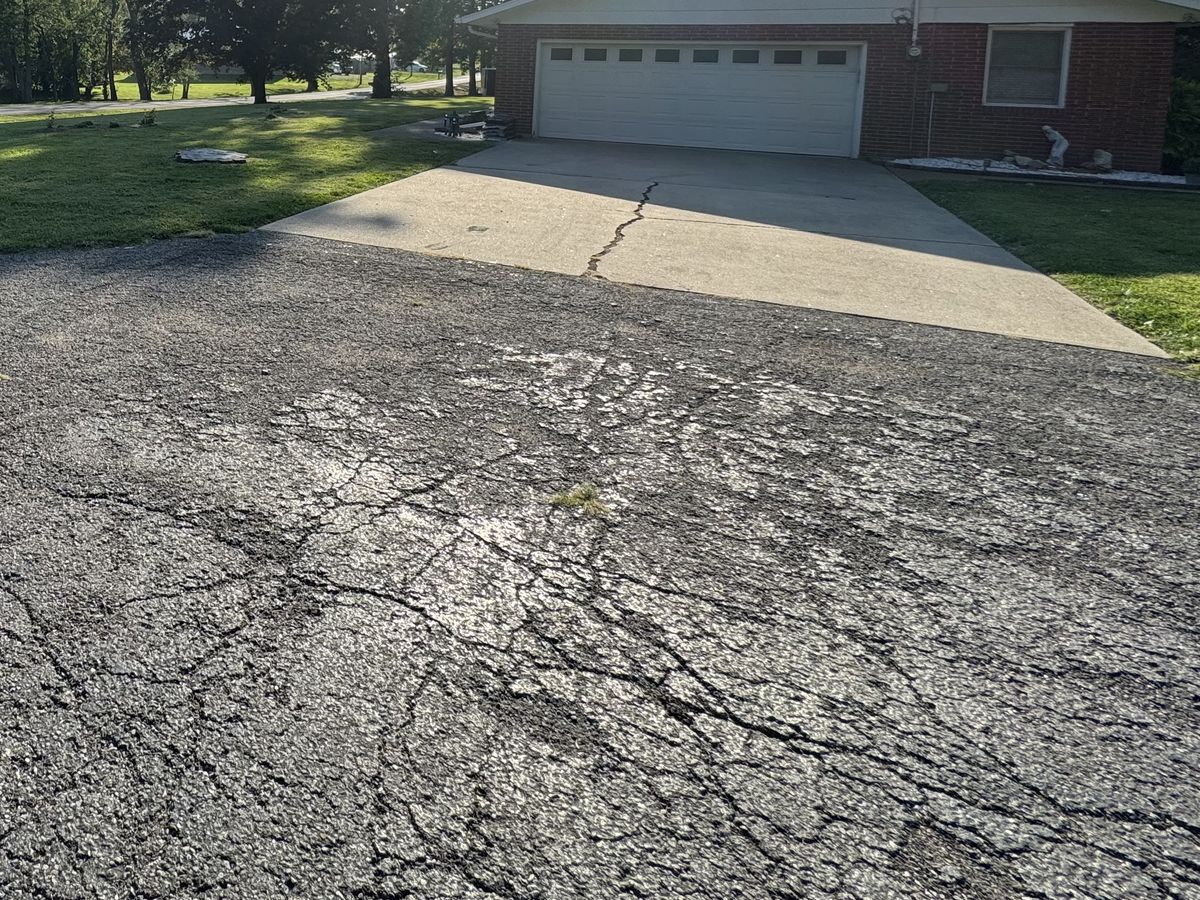
"Can we just patch it, or does the whole thing need to come out?" is the first question almost every property manager asks me when I walk a parking lot around Columbia. Short answer: if the damage is in the surface, patch it. If the damage is in the base under the surface, patching is pouring money into a hole that keeps opening back up. I'm Chris Kurtz, owner of ATLAS Demolition & Site Work in Columbia, MO. The parking lot replacement vs repair call comes down to reading what the pavement is telling you about the base. This guide walks through the signs I look for, the cases where repair still wins, and what each path costs in Mid-Missouri.
Quick Answer: In the parking lot replacement vs repair decision, replacement wins when the damage is coming from the base: alligator cracking across large areas, potholes that return in the same spots after patching, water that stands for hours, concrete panels that heave or step at the joints, and repair bills that climb every year. Repair or resurfacing wins when cracks are isolated, the base is firm, and the lot is under about 15 years old for asphalt or 25 for concrete. Two rules of thumb we use in Mid-Missouri: if more than about 25 percent of the lot shows structural distress, or you've spent a quarter of a replacement price on repairs in the last 3 years and the lot still looks bad, stop patching and replace it.
In This Guide:
Why Parking Lot Replacement vs Repair Is a Base Question, Not a Surface Question
A parking lot is three layers. At the bottom is the subgrade, which around Columbia means native clay. On top of that sits 6 to 8 inches of compacted base rock. On top of the rock is the surface you see: 3 inches of asphalt or 6 inches of concrete. The surface gets all the attention, but the base rock and the subgrade carry the weight. The surface only spreads the load out so the base can hold it.
Every surface repair there is, from crack sealing and sealcoating to patching and overlays, assumes the base underneath is sound. When it is, those repairs work and they're worth every dollar. When water has gotten into the base through open cracks or bad drainage, the rock loses its strength, the clay under it turns to pudding, and the surface loses its support. From that point on every repair fails from underneath, no matter how good the work on top was.
So the parking lot replacement vs repair question is never "how bad does it look." It's "what is the base doing." Everything below is about reading the base from what you can see on the surface, because the surface always tells on it.
9 Signs Your Parking Lot Needs Replacement, Not Repair
These are the signs that settle parking lot replacement vs repair on our proposals, moving a lot from the repair column to the replacement column. One of them by itself in one spot usually means a full-depth patch. Several of them across the lot means the lot is done.
1. Alligator cracking across large areas
Alligator cracking is the web of interconnected cracks that looks like reptile skin, and it's the single clearest sign of base failure. The Asphalt Institute ties it to weak subgrade, pavement that's too thin for the loads, or overloading, and usually some combination. Crack sealing can't fix it because there's nothing to seal, the whole area is broken. An overlay over it reflects the cracks right back through in 1 to 2 winters. One 10 by 10 patch of it next to the dumpster pad is a full-depth repair. Alligator cracking down the drive lanes and across the stalls ends the parking lot replacement vs repair debate. That lot gets replaced.
2. Potholes that come back in the same spot
A pothole is base failure that finally broke through the surface. Patch it and the patch sits on the same soft base the original surface sat on. It holds a season, maybe two, and then the same hole opens up with the patch material sitting in the bottom of it. The second time a pothole shows up in the same place, the base there is gone. A lot with 3 or 4 repeat potholes in the drive lanes has a base problem, not a pothole problem.
3. Water that stands for hours after a rain
Birdbaths in the stalls and ruts in the drive lanes mean the base has settled or washed out under those spots. Standing water is bad on its own, since it's what feeds the base failure in the first place, and it's worse in winter when it freezes in the cracks and pries them wider. Minor puddles on a lot with a firm base can be leveled with an overlay. Ruts you can feel in the truck and ponding that lasts past lunch are a settled base, and no surface fix changes the grade of the rock underneath.
4. Concrete panels that rock, heave, or step at the joints
This one is concrete specific. When a truck drives over a panel and you see water and gray silt squirt out of the joint, that's pumping, and it means the base under that panel is washing out a little more with every pass. A panel that rocks, or a joint where one panel sits a half inch higher than the next, is a panel with nothing holding it up. One or two of them get replaced as panels. A row of them down the truck lane, or panels heaving every winter and settling every spring, means the subgrade is moving and the lot needs to come out and be rebuilt on a base that drains.
5. Spalling and joint failure that go deeper than the surface
Shallow spalling at a concrete joint, where the top inch or so chips away, is a partial-depth repair and not a big deal. The problem is spalling that extends well past the joint and keeps going. The Federal Highway Administration is blunt about freeze-thaw damage in jointed concrete, and the industry's own partial-depth repair guidance says spalls that reach well beyond the joint usually mean deterioration below the surface, where a partial-depth patch won't hold. Corroded dowel bars at the joints and D-cracking, the dark crescent cracks that run parallel to the joints, are the same story. Those are full-depth problems, and when they're at most of the joints, they're a replacement problem.
6. The lot is past its expected life
An asphalt lot built on a proper base lasts about 15 to 20 years in Mid-Missouri. A concrete lot lasts 30 or more. Age alone doesn't settle parking lot replacement vs repair, and I've walked 25-year-old asphalt lots that just needed sealcoat and stripes. But a lot at the end of its life with widespread cracking is a lot where repair money buys very little time. You're paying to make an old lot look a year younger, and next spring it's old again.
7. The repair bills are stacking up
Pull the invoices for the last 3 years. Crack sealing one year, patching the next, sealcoat and stripes the year after, then more patching. If those add up to a quarter of what a replacement would cost and the lot still looks bad, you've been paying for a replacement on the installment plan and not getting one. This is the parking lot replacement vs repair sign owners miss most, because each individual repair looked cheap at the time.
8. An overlay that is already cracking
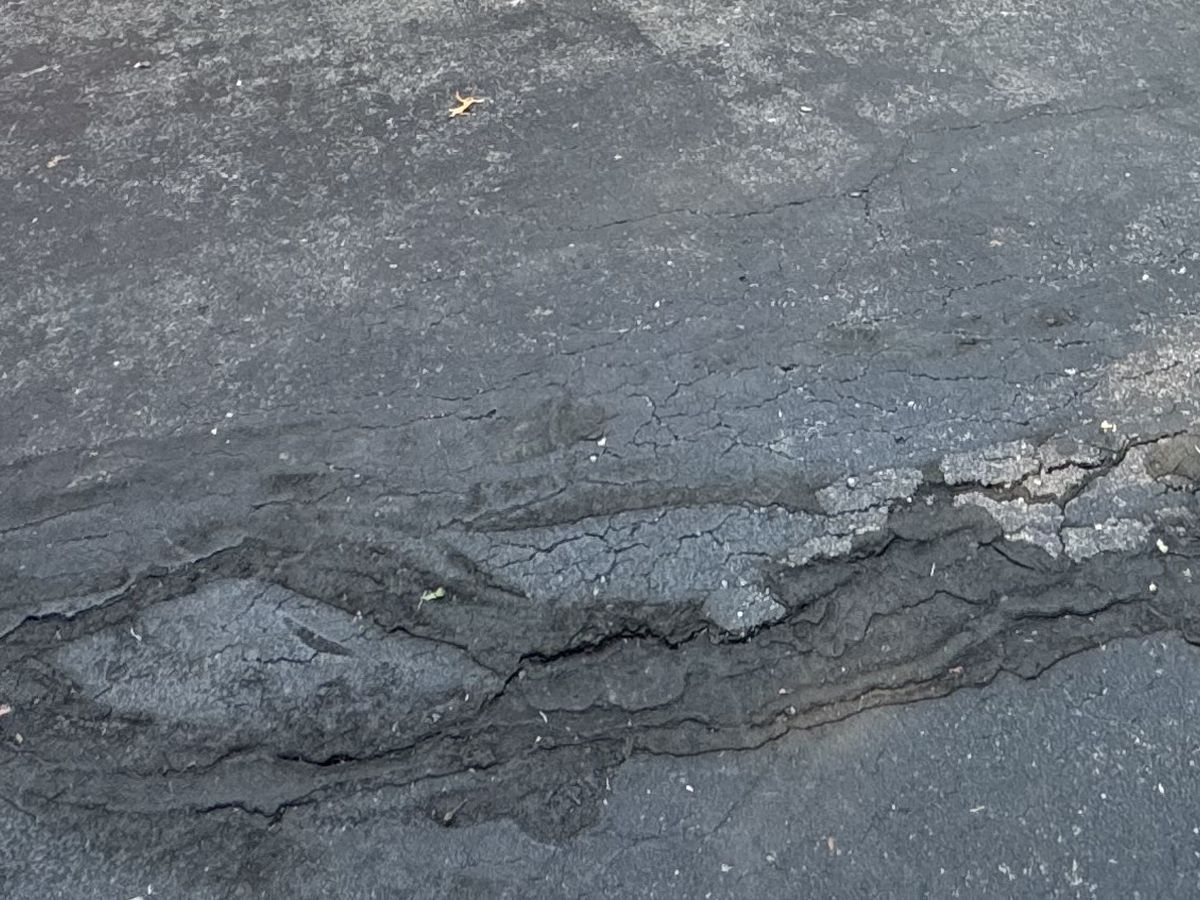
If the lot got a new surface 2 or 3 years ago and the cracks are back in the same pattern as before, somebody overlaid a failed base. That's reflective cracking, and it's not the paving crew's fault. The new asphalt added weight and no support, and the old cracks worked their way up through it. Usually the only honest fix at that point is to remove both layers and rebuild from the rock up, because now there's 5 or 6 inches of broken asphalt on top of the same soft base.
9. Drainage and grade that were wrong from day one
Some lots were built to drain toward the building, or into a low corner with no inlet, or flat enough that water never leaves. You can't fix grade with a surface treatment because the surface follows the base. Replacement is the one time you get to re-cut the grade, add an inlet where one was always needed, and set the base so the lot drains to the curb instead of the front door. If drainage is the root problem, it belongs on the replacement side of the ledger no matter how the surface looks.
When Repair or Resurfacing Still Makes Sense
I replace lots for a living and I'll still tell you to repair yours if that's the right answer. It's the right answer more often than paving ads suggest. In the parking lot replacement vs repair decision, repair wins when:
- The cracks are isolated. A few longitudinal or transverse cracks with sound pavement between them get routed and sealed for $1 to $3 a linear foot. Do it every fall and the lot keeps water out of the base for years.
- The surface is just tired. Faded, oxidized asphalt with no base problems needs sealcoat and fresh stripes, not a contractor with an excavator.
- There's one bad spot. A single pothole or one area of alligator cracking near a loading zone gets a full-depth patch: cut out the failed section, replace the base, pave it back. Done right, that patch outlasts the rest of the lot.
- A few concrete panels are shot and the rest are solid. Concrete is repaired panel by panel. Cut the bad ones out at the joints and pour them back.
- The lot is under about 15 years old with a firm base. A mill and overlay, grinding off the top 1.5 to 2 inches and laying new asphalt, is a legitimate way to get 8 to 12 more years out of a sound lot at a fraction of the replacement price.
One honest note on scope. ATLAS does removal, base, and replacement. We don't sealcoat or stripe. If your lot needs maintenance and not a rebuild, I'll say so on the walkthrough and you can call a paving maintenance outfit. Telling you to replace a lot that needs sealcoat would be a good way to get a bad review.
Parking Lot Replacement vs Repair: What Each Path Costs in Mid-Missouri
Here's what both sides of parking lot replacement vs repair cost in 2026, from jobs around Columbia, Jefferson City, Fulton, and Moberly. Repair prices are what the maintenance contractors we work alongside typically charge. Removal and replacement prices are ours, and they match the numbers in our parking lot removal cost guide.
| Work | Typical Mid-Missouri Cost | What It Buys |
|---|---|---|
| Crack sealing | $1 to $3 per linear foot | Keeps water out of a sound base. Yearly chore. |
| Sealcoating | $0.15 to $0.30 per square foot | Surface protection every 3 to 5 years. Cosmetic on a failed base. |
| Hot-mix pothole patch | $150 to $500 each | A season or two if the base under it is soft. |
| Full-depth asphalt patch | $5 to $10 per square foot | A permanent fix for one failed area, base included. |
| Mill and overlay (1.5 to 2 inches) | $2.50 to $4.50 per square foot | 8 to 12 years on a firm base. 1 to 2 years over a failed one. |
| Concrete panel replacement | $15 to $25 per square foot of panel | Fixes one bad panel. Chases the problem if the base is washing out. |
| Full removal, asphalt | $1.50 to $3.50 per square foot | Tear out, haul, and recycle the old surface. |
| Full removal, concrete | $3 to $6 per square foot | Saw-cut, break, haul, and crush the old slab. |
| New asphalt surface | $4 to $8 per square foot installed | 15 to 20 years on a rebuilt base. |
| New concrete surface | $9 to $17 per square foot installed | 30 or more years on a rebuilt base. |
Put that on a real lot. A 15,000 square foot lot, about 40 spaces, runs $60,000 to $120,000 for removal plus new asphalt, and $140,000 to $250,000 for removal plus new concrete. Now the repair side. An owner patching 1,500 square feet of failures every year at $7 a foot spends $10,500 a year. Add a sealcoat and stripes every 3 years at about $4,000, and crack sealing in between. Over 5 years that's $50,000 to $60,000, and at the end of it the lot has the same base it started with and a fresh crop of failures. That's the comparison that matters in parking lot replacement vs repair: not one patch against one rebuild, but 5 years of patching against a lot that's actually fixed.
Which surface to put back? Asphalt is about half the install cost and opens in a day or two. Concrete costs more, cures for a week, and then mostly gets left alone for 30 years. I broke the whole decision down in the asphalt vs. concrete parking lot comparison. We price both on the same proposal.
The 25 Percent Rule and the 3-Year Test
Two rules of thumb settle most parking lot replacement vs repair arguments on our walkthroughs. Neither one is an engineering standard. They're what 2 decades of looking at failed pavement in Mid-Missouri clay have taught me, and they line up with what most honest paving contractors will tell you.
The 25 percent rule. Walk the lot and mark every area with structural distress, meaning alligator cracking, repeat potholes, rutting, pumping or stepped concrete panels, and failed patches. Hairline cracks and faded color don't count. If the marked areas add up to more than about a quarter of the lot, replace it. Below that, full-depth patching of the bad areas and maintenance on the rest is usually the better spend. Right around a quarter is where it becomes a judgment call, and that's when we open a test hole and let the base decide.
The 3-year test. Add up everything spent on the lot in the last 3 years. If that number is a quarter or more of the replacement quote and the lot still shows the signs above, the repairs aren't working and the next 3 years will cost the same or more. Replacement stops the bleeding. If the 3-year number is small and the lot is holding, keep maintaining it.
There's a third test that doesn't fit on a rule-of-thumb list: what the lot costs you when it fails. A trip-and-fall claim on a heaved panel, a delivery driver who won't bring the truck across the potholes, a tenant who moves because the lot looks like the building isn't cared for. Those don't show up on a paving invoice, but they're real, and they tend to tip a close parking lot replacement vs repair call toward replacement.
How We Check a Lot Before We Tell You to Replace It
A proposal that just says "replace" without looking at the base isn't worth the paper. Here's how we settle parking lot replacement vs repair on site:
- Walk it after a rain if we can. Water shows you the low spots, the ruts, and the pumping joints in 10 minutes. On a dry day we bring a hose for the suspect areas.
- Map the distress. Alligator areas, potholes, settled areas, bad panels, failed patches, marked on a sketch of the lot so we can total them up against the 25 percent rule.
- Open a test hole at the worst spot. This is the step most estimates skip. We cut a small square out of the surface and look at what's under it: how thick the asphalt really is, how much base rock there is, and whether it's dry and tight or wet and dirty. A lot with 2 inches of asphalt over 3 inches of muddy rock over wet clay is done, and no amount of surface work will change that. A lot with 3 inches of asphalt over 8 inches of dry, clean rock usually gets a repair recommendation.
- Check the drainage path. Where does water go when it leaves the lot, and does it actually leave? Inlets, curbs, the grade toward the street, the downspouts from the building.
- Look at the edges and curbs. Broken edges mean water has been getting under the surface from the sides. Heaved curbs mean the subgrade moves.
- Pull the history. When was it built, when was it last overlaid, what's been patched. Most property managers have a folder.
Then you get a written proposal with both paths on it: the repair list with what each item should buy you, and the full removal and replacement with phasing. Removal is a fixed price for labor and equipment, disposal is billed at actual tonnage, and the replacement is broken out so you can see removal, base, and surface as separate numbers. If repair wins the parking lot replacement vs repair comparison, the proposal says so.
Why Lots Fail Faster Around Columbia, MO
A lot of what tips parking lot replacement vs repair toward replacement in Boone County comes down to three local facts. First, the soil. Most of Columbia sits on clay subgrade that swells when it's wet and shrinks when it's dry. A base built straight on that clay without enough rock, or without the clay compacted first, moves every season, and the surface moves with it. That's why so many lots here heave in February and settle in June.
Second, the winters. Mid-Missouri doesn't get the deep frost that Minnesota does, but it gets something worse for pavement: dozens of freeze-thaw cycles a season, where water in the cracks freezes overnight, expands, thaws by noon, and runs deeper into the base to do it again the next night. Add deicing salt on concrete and the joints go first. Any crack left open in November is wider by March.
Third, the trucks. A lot of the commercial lots along Business Loop 70, Paris Road, Providence Road, and the older strips off Broadway were built in the 1980s and 1990s for sedans. They now take daily box-truck deliveries, roll-off dumpsters, and garbage trucks that weigh 10 times what they were designed for. The same is true of church lots in Jefferson City and Fulton that get a semi for every furniture drive and a bus for every youth trip. A lot built for cars and used by trucks fails from the base up, and it usually fails right where the trucks turn.
Outside town it's the same clay with worse drainage. Rural lots in Ashland, Hallsville, Centralia, and out toward Boonville often have no curb, no inlet, and a ditch that silted in years ago. Water sits against the edge of the pavement and works its way under. Those are the lots where the edges fail first and the middle follows.
What Replacement Looks Like Without Closing Your Doors
The reason owners put off replacement is usually the business, not the money. Nobody can close a restaurant or a clinic for 2 weeks. So we don't ask them to. On our parking lot removal and replacement jobs we split the lot into phases, keep the entrance and the front rows open, and lay down temporary striping so the open half works. A church gets Monday through Friday and a clean, open lot by Sunday. A restaurant can get night removal. A medical office keeps the handicap stalls by the door open through every phase.
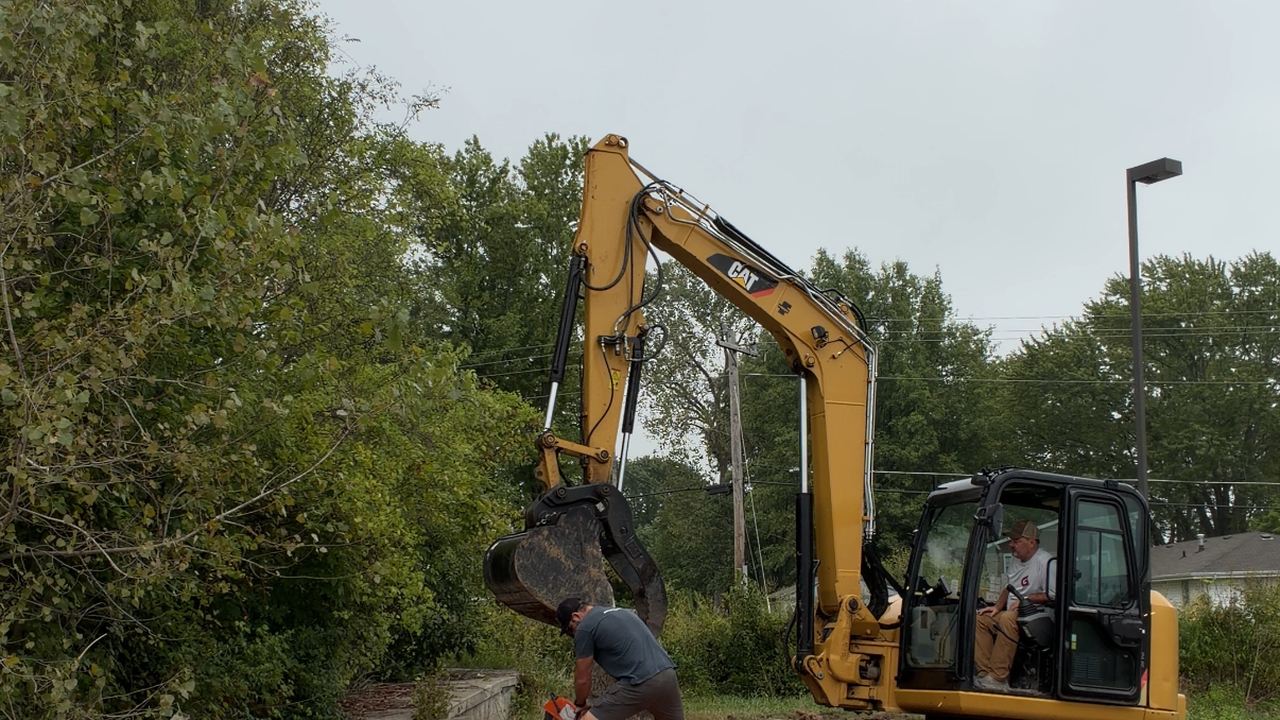
Each phase runs the same way. Saw-cut the edge so the open side stays clean, break or mill the old surface, load and haul it to the recycler, then look at the base now that it's exposed. This is where the parking lot replacement vs repair question gets its final answer, because once the surface is off there's no guessing left. Soft base gets dug out and replaced with compacted rock. The grade and drainage get corrected while the rock is open. Then the new surface goes down, the phase opens, and we move to the next section. Removal takes 2 to 5 days per phase depending on size and whether it's asphalt or concrete. Replacement adds a few days for asphalt and about a week of cure for concrete.
Not Sure Which Column Your Lot Is In?
Send the address and tell me how the lot gets used. We'll walk it, open a test hole, and write up parking lot replacement vs repair on one proposal so you can see what repair buys and what replacement costs.
Request a Free Consultation Or Call (573) 234-6641Frequently Asked Questions
How do I know if my parking lot needs to be replaced or just repaired?
Parking lot replacement vs repair comes down to where the damage is coming from. Surface problems, like a few isolated cracks, faded color, or one pothole, can be repaired. Base problems cannot. The signs of a failed base are alligator cracking spread across drive lanes, potholes that come back in the same spots after patching, water that stands for hours after a rain, and concrete panels that rock, heave, or step at the joints. If more than about 25 percent of the lot shows that kind of structural distress, or you have spent a quarter of a replacement price on repairs in the last 3 years and the lot still looks bad, replacement is the better investment. The fastest way to settle it is to open a test hole at the worst spot and look at the base. We do that on every walkthrough around Columbia.
How long does a parking lot last in Missouri?
An asphalt parking lot in Mid-Missouri lasts about 15 to 20 years if it was built on a proper base and sealcoated every few years. A concrete lot lasts 30 years or more with joint sealing every 5 to 10 years. Both numbers assume the base was built right the first time. A lot paved thin over unprepared clay can fail in under 10 years, and we see plenty of those around Columbia. Freeze-thaw cycles, deicing salt, and heavier delivery trucks than the lot was designed for all take years off the schedule. Age by itself is not a reason to replace a lot, but a lot past its expected life with widespread cracking is a lot where repair money buys very little time.
Can you put new asphalt over an old parking lot instead of replacing it?
Sometimes. A mill and overlay, where the top 1.5 to 2 inches of old asphalt is ground off and a new surface is laid, works when the base under the lot is still firm and the damage is in the surface layer. It runs about $2.50 to $4.50 per square foot in Mid-Missouri and buys 8 to 12 years on a sound lot. It does not work over alligator cracking or soft base. The old cracks reflect straight up through the new surface, usually within 1 to 2 winters, and now you have a thicker, heavier lot with the same bad base under it. Asphalt can go over old concrete in some cases, but the slab has to be stable and the joints will telegraph through unless treated. We price the overlay and the full replacement side by side so you can see what the extra money actually buys.
How much does it cost to replace a parking lot compared to repairing it?
On a 15,000 square foot lot, about 40 spaces, full removal plus a new asphalt surface runs $60,000 to $120,000 in Mid-Missouri in 2026. Removal plus new concrete runs $140,000 to $250,000. Repairs are much cheaper per visit. Crack sealing is $1 to $3 per linear foot, sealcoating is $0.15 to $0.30 per square foot, a hot-mix pothole patch is $150 to $500, and full-depth patching is $5 to $10 per square foot. The catch is that repairs on a lot with a failed base do not last. An owner who patches 1,500 square feet a year and sealcoats every 3 years can spend $40,000 to $60,000 over 5 years and still own a failing lot. That is the parking lot replacement vs repair comparison that matters: not one repair against one replacement, but 5 years of repairs against a lot that is fixed.
Can a concrete parking lot be repaired, or does it have to be replaced?
Concrete lots are repaired panel by panel, which is an advantage. A cracked, heaved, or sunken panel gets saw-cut at the joints, broken out, and poured back, usually $15 to $25 per square foot. Shallow spalling at a joint can be fixed with a partial-depth repair, and joints can be resealed to keep water out. The lot needs replacing when the problem is under the panels instead of in them. Panels that pump water and fines out of the joints when a truck drives over, panels that step up or down at the joints, or more than a quarter of the panels showing structural cracks all point to a base that has washed out or a subgrade that is moving. At that point replacing panels one at a time is chasing the problem around the lot, and a full rebuild on a proper base is the better call.
Need a Straight Answer on Parking Lot Replacement vs Repair in Columbia, MO?
You know the signs now. The part that's hard to do from the office is the test hole, and that's the part that settles it. ATLAS Demolition & Site Work removes and replaces parking lots for property managers, churches, schools, restaurants, and strip centers across Columbia, Jefferson City, Fulton, Moberly, Boonville, and the rest of Mid-Missouri. We walk every lot before we price it, we tell you when repair is the better spend, and when it isn't, we phase the replacement so your business stays open. Licensed and insured, with certificates ready for any property manager who needs them before we mobilize.
- Phone: (573) 234-6641
- Email: chris@deployatlas.com
- Online: Request a Free Consultation