
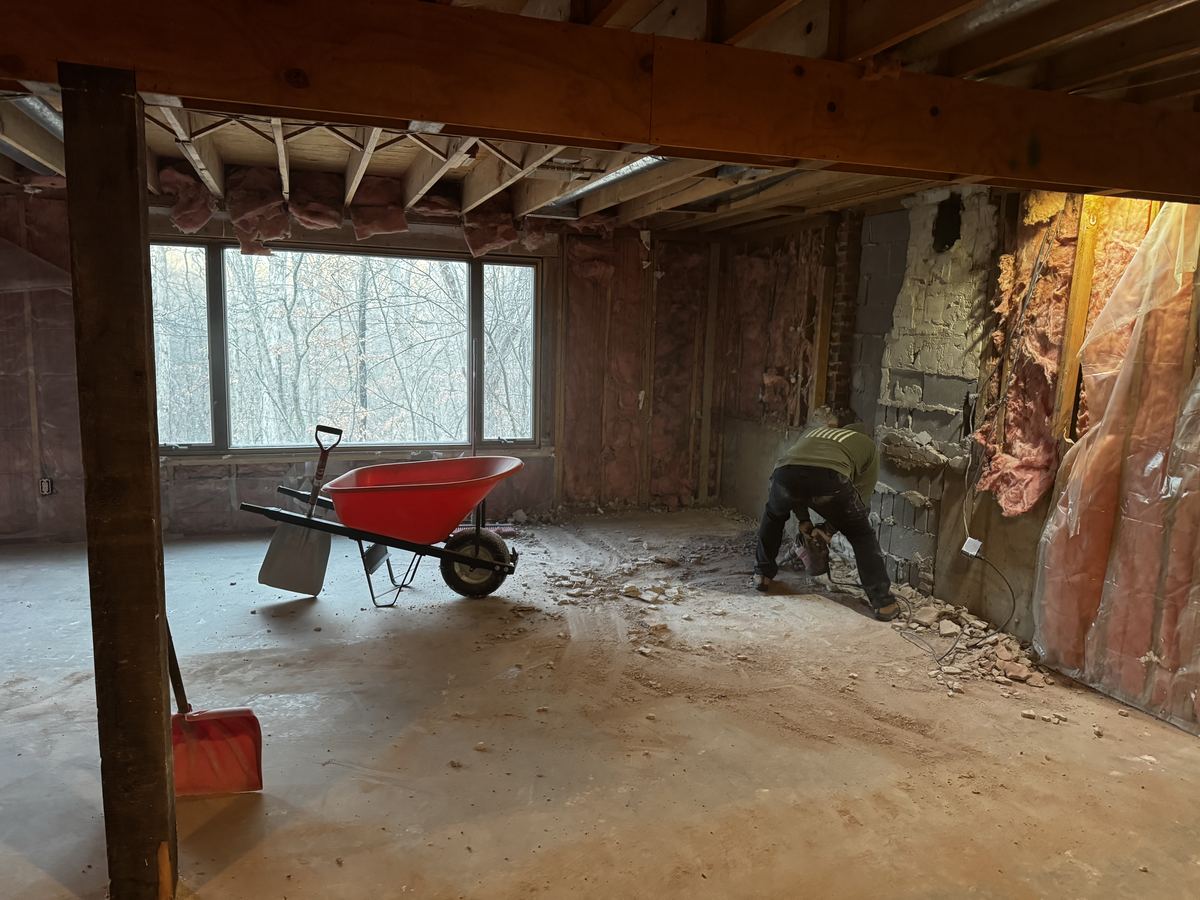
"Where does all that concrete go?" is one of the most common things I hear right after the last truck pulls off a driveway or slab job. Short answer: almost none of it goes to a landfill. If you searched concrete recycling Columbia MO to find out where a torn-out driveway ends up, it goes to a crusher and comes back as base rock. I'm Chris Kurtz, owner of ATLAS Demolition & Site Work in Columbia, MO. Here's how it works in Boone County, what it costs, and what keeps a load from being recycled.
Quick Answer: Concrete recycling in Columbia, MO works like this. Broken concrete from driveways, slabs, sidewalks and foundations is hauled to a crushing facility in Boone County, weighed, crushed, run past a magnet that pulls out the rebar and mesh, and screened into base rock. That rock goes back under new driveways, roads, building pads and pipe trenches. Clean concrete costs less per ton to recycle than mixed debris costs to landfill, inside a disposal range of $40 to $90 per ton in Mid-Missouri. A 4-inch slab weighs about 50 pounds per square foot, so a typical two-car driveway is 15 to 20 tons.
In This Guide:
Where Removed Concrete Goes After It Leaves Your Property
Every concrete removal job in Columbia, MO ends the same way. The slab is broken, loaded into our trucks, and hauled off. From there it has two possible destinations: a concrete recycler or a landfill. On our jobs, the recycler is the default. That's concrete recycling in Columbia, MO from the customer's side. You never see it, but it's where your driveway goes.
There's a practical reason for that. Concrete is heavy, and disposal is charged by the ton. A 4-inch slab weighs about 50 pounds per square foot. A 700 square foot driveway is roughly 17 tons before you count the apron or the sidewalk. Paying landfill rates on that much weight, for a material that can be crushed and reused, makes no sense for you or for us.
Concrete is also the biggest piece of the debris pile nationally. The EPA's figures on construction and demolition materials show it as the largest share by weight, and most of it gets recovered instead of buried. Our post on where demolition debris goes covers the wood, metal and shingles. This one stays on the concrete.
How Concrete Gets Recycled, Step by Step
People picture concrete recycling in Columbia, MO as something complicated. It isn't. It's a big crusher, a magnet, and a set of screens. Here's the path a driveway takes from your yard to a stockpile of rock.
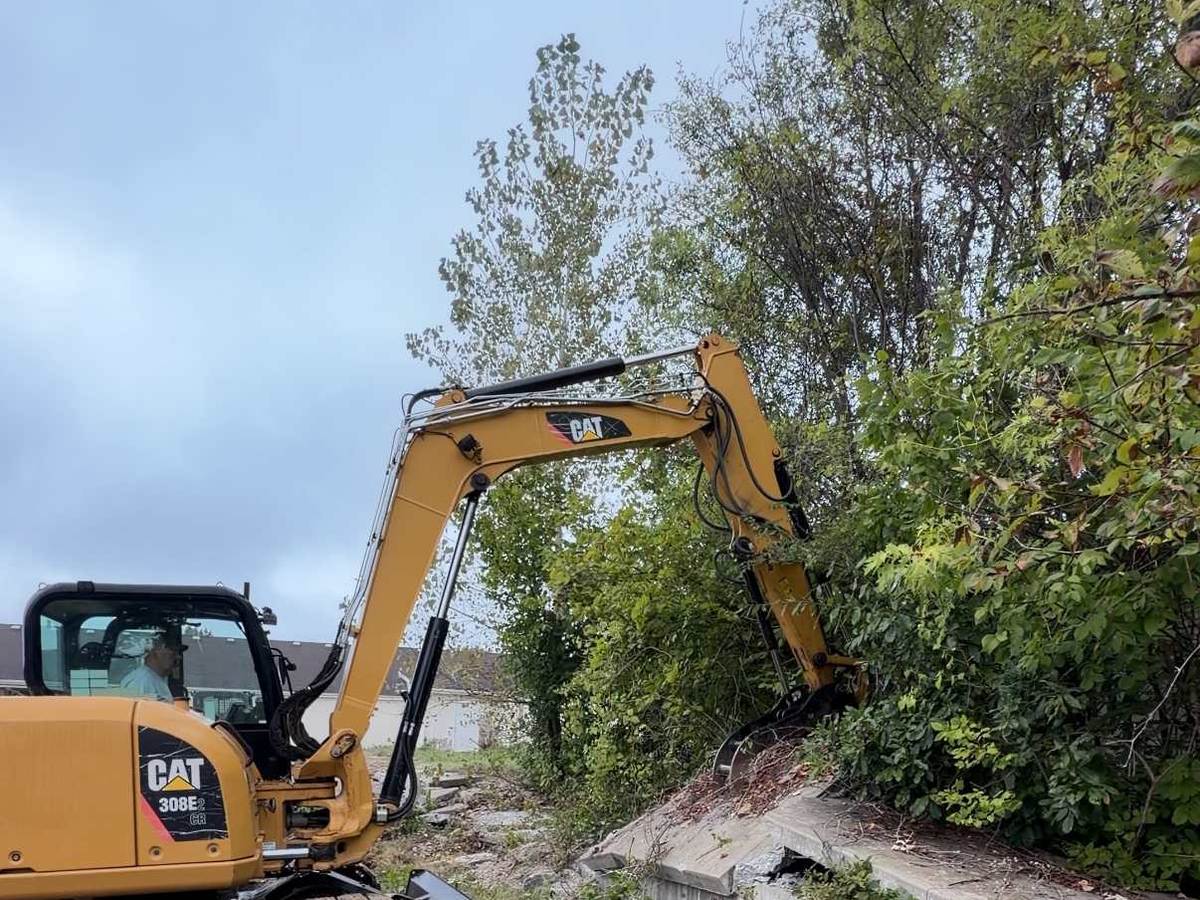
- Saw-cut and break. We cut a clean line where the removal meets concrete that stays. Then the hydraulic breaker on our Cat 308 breaks the slab into pieces the grapple can load.
- Sort at the site. Concrete goes in one truck. Dirt, sod, roots and asphalt stay out of it. This is the step that decides whether the load recycles.
- Cut the steel. Mesh and light rebar ride along. Heavy bar gets cut so nothing long is hanging out of the pieces.
- Haul and weigh. The truck crosses the scale at the recycler loaded, dumps, and crosses again empty. The difference is the tonnage on your ticket.
- Crush. The facility feeds the pile through a crusher that breaks it down to rock a few inches across and smaller.
- Pull the steel. A magnet over the conveyor lifts out the rebar and mesh. That steel goes to a scrap yard.
- Screen and stockpile. Screens sort the crushed material by size. The finished product is sold as base rock and fill.
The first four steps are ours. The last three happen at the recycler. The whole point of the way we load is to hand them a pile they can crush without picking through it.
What Recycled Concrete Becomes
Crushed concrete has one main job, and it does it well. It packs tight. That makes it a good layer between soil and whatever gets built on top. A lot of what comes out of concrete recycling in Columbia, MO ends up back under pavement a few miles from where it was torn out.
| What Comes Out | Where It Gets Used |
|---|---|
| Crushed base rock | Under new driveways, parking lots, roads, sidewalks and building pads |
| Larger crushed rock | Gravel drives, construction entrances, fill where a site needs to come up to grade |
| Finer material | Pipe bedding and trench backfill |
| Rebar and wire mesh | Scrap yard, then melted into new steel |
Missouri treats uncontaminated concrete as clean fill, not waste. The Department of Natural Resources explains how that works on its construction, renovation and demolition waste page. That rule is what lets a recycler sell crushed concrete as a product.
It's also why base matters when we pour back. A new slab is only as good as the compacted rock under it. If you're replacing what we tear out, our page on concrete driveway replacement walks through the base, the forms and the pour.
What Keeps a Load Out of the Recycler
Not every load qualifies for concrete recycling in Columbia, MO. A recycler wants concrete, and only concrete. Here's what sends a truck to the landfill instead.
- Dirt, sod and roots. A slab scooped up with a foot of soil under it is a dirt load with concrete in it. We break and lift, we don't scrape.
- Too much steel. Mesh is fine. Heavy bar on tight centers with long tails sticking out can get a load turned away.
- Asphalt mixed in. Asphalt recycles too, but separately. On a job with both, like a parking lot removal, each one gets its own truck.
- Trash and building debris. Wood forms, plastic, insulation, carpet glue-down. Anything that isn't rock or steel.
- Contamination. Concrete soaked with oil or chemicals, or anything from around an underground tank. If we find that, we stop and talk before it goes anywhere.
The short version: clean loads recycle and dirty loads don't. Two slabs of the same size can differ by $500 or more on disposal depending on whether the load is clean enough for the recycler. Keeping it clean is our job, and it's one of the things you're paying a contractor for.
What Recycling Does to Your Price
Our pricing has two parts. There's a fixed price for mobilization, equipment and crew. Then disposal is billed as a pass-through at actual tonnage, with the recycler's scale tickets attached to the invoice. Nothing is marked up on the dump side.
Disposal in Mid-Missouri runs $40 to $90 per ton right now. Clean concrete to a recycler is the low end. Concrete mixed with dirt or debris going to the landfill is the high end. So concrete recycling in Columbia, MO isn't a green add-on you pay extra for. It's the cheaper line on the invoice.
The other thing that moves the disposal number is distance. A recycler 15 minutes from the job means more loads per day out of the same truck. A long haul means more trucking time on every ton. Our concrete removal cost guide breaks down the per-square-foot numbers by slab type.
Concrete Recycling in Columbia, MO, Boone County and the Rest of Mid-Missouri
Most of the concrete we remove comes from inside Columbia and the towns right around it, and it stays in Boone County. A driveway in town is a short haul to the crusher. That's the easy case.
Farther out, the math changes a little.
Jobs in Ashland, Fulton, Boonville, Moberly, Fayette and Jefferson City are a longer drive back, so we plan the trucking around it. Sometimes that means a bigger truck and fewer trips. Sometimes it means a closer facility. The concrete still gets recycled. The haul is what we're managing.
Mid-Missouri also makes a lot of broken concrete. Our clay soil swells when it's wet and shrinks when it's dry, and the freeze-thaw cycle works on every crack through the winter. Slabs poured on thin base heave and settle. That's why so much of our concrete work in Columbia, MO is tearing out flatwork that failed from underneath, and why the base under the replacement matters so much.
One more local note. On a teardown, people sometimes ask if the old foundation can be broken up and left in the basement hole. Clean concrete is legal fill in Missouri, but a hole full of loose block and slab settles for years. On a lot anybody plans to build on, we haul the concrete to the recycler and backfill with clean fill compacted in lifts.
Have Concrete That Needs to Come Out?
Send the square footage and two photos, or I'll come measure it. You get a fixed price for the removal and the scale tickets for every load.
Request a Free Consultation Call (573) 234-6641Frequently Asked Questions
Where does removed concrete go in Columbia, MO?
On our jobs it goes to a concrete recycler in Boone County, not a landfill. The broken slab is loaded into our trucks, weighed at the recycler's scale, and dumped in a pile that gets crushed into base rock. That's true for driveways, patios, sidewalks, garage floors and the foundations left after a teardown. The exceptions are loads that are too dirty to crush, like concrete mixed with soil, roots, trash or a lot of asphalt. Those go to a permitted landfill, which for most work in town is the City of Columbia Landfill on Peabody Road. Concrete recycling in Columbia, MO is the normal path, and the landfill is the fallback.
Can concrete with rebar or wire mesh be recycled?
Yes. Steel in the slab doesn't keep it out of the recycler, and reinforced slabs are a normal part of concrete recycling in Columbia, MO. Wire mesh and light rebar go through the crusher with the concrete, and a magnet over the conveyor pulls the steel out so it can go to a scrap yard. What causes trouble is a lot of steel or long bars sticking out of the pieces. A recycler can turn away a load like that. On heavily reinforced slabs, footings and foundation walls, we cut the bars with a shear or a torch while we're breaking, so the pieces load clean. That extra cutting is part of why reinforced concrete costs more to remove than a plain 4-inch slab.
Is recycling concrete cheaper than taking it to the landfill?
Almost always. Disposal on our jobs runs $40 to $90 per ton in Mid-Missouri, and clean concrete going to a recycler sits at the low end of that range. Concrete mixed with dirt, asphalt or debris goes to the landfill at the high end. On a two-car driveway that weighs 15 to 20 tons, that gap is real money. We bill disposal as a pass-through at actual tonnage with the scale tickets attached, so when a load recycles, the lower rate shows up on your invoice and not in our pocket. Concrete recycling in Columbia, MO is one of the few times the cheaper option and the better option are the same one.
Can I take my own broken concrete to a recycler?
For a small job, yes. A slab under about 100 square feet, 4 inches thick with no steel in it, is something a homeowner can break with a rented electric breaker and haul in a trailer. Call the facility first and ask what they accept, what the gate fee is, and how they want the load. Keep it clean, with no dirt, sod or trash mixed in, and keep the pieces small enough to handle. Be honest with yourself about the weight. A 10 by 10 patio is about 2.5 tons, which is more than most pickup and trailer combinations should carry in one trip. Past that size, a contractor with a breaker and a dump truck is faster and usually cheaper.
What is recycled concrete used for?
Mostly base rock. Crushed concrete compacts well, so it goes under new driveways, parking lots, roads, building pads and sidewalks as the layer between the soil and the new surface. It's also used for pipe bedding, trench backfill, gravel drives, and general fill where a site needs to come up to grade. The steel that comes out of it is sold as scrap and melted down. Under Missouri's solid waste rules, uncontaminated concrete counts as clean fill, which is why it can be reused this way instead of being treated as waste. What it generally doesn't become is the rock in a new structural concrete mix. That still comes from a quarry.
Need Concrete Removed and Recycled in Columbia, MO?
Now you know how concrete recycling in Columbia, MO works and where your slab goes. The part that decides whether your load recycles or gets buried is how it's broken, sorted and loaded on your property. ATLAS Demolition & Site Work removes driveways, slabs, sidewalks, patios and foundations across Columbia, Boone County and the rest of Mid-Missouri, and we pour it back if you want it. We answer the phone, we show up when we say, and you see every scale ticket.
- Phone: (573) 234-6641
- Email: chris@deployatlas.com
- Online: Request a Free Consultation or send us a message