
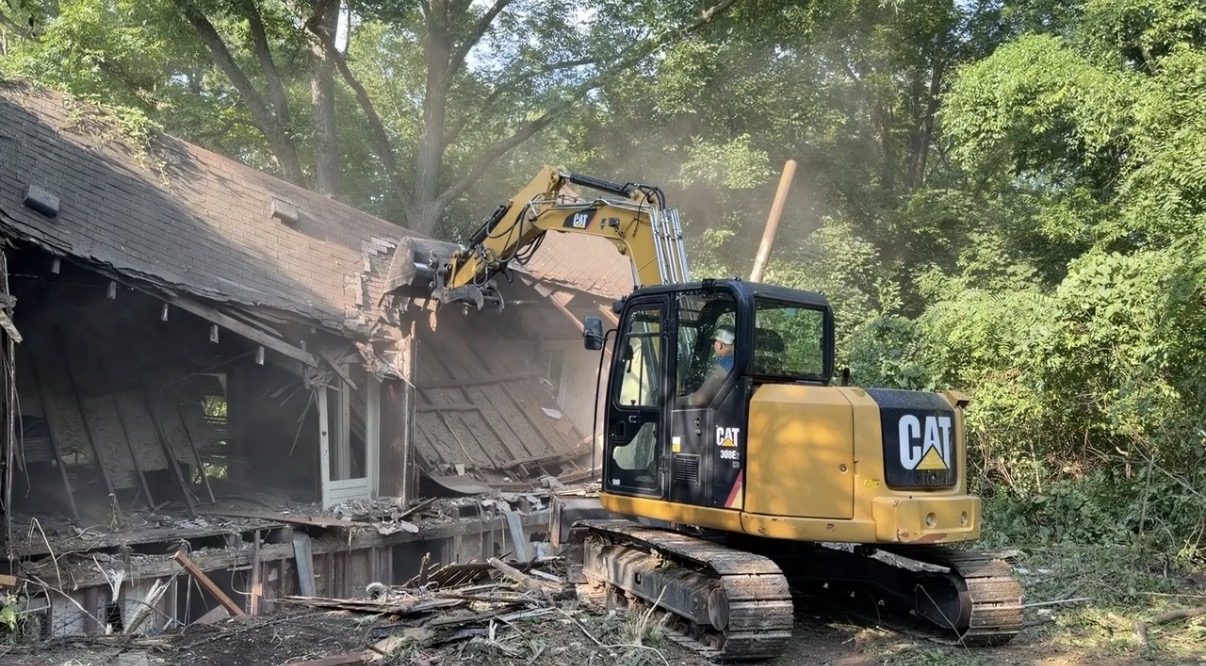
If you're pricing grain bin removal in Missouri, here's the short version: a small bolted steel bin is a few thousand dollars and a day of work, a big bin with a dryer and a leg is five figures and most of a week, and a concrete silo costs more than either because every ton has to be broken and hauled. I'm Chris Kurtz, owner of ATLAS Demolition & Site Work in Columbia, MO. We tear down bins, silos, pole barns, and old farmhouses across Boone County and the counties around it, then break out the concrete and put the ground back.
Quick Answer: Typical 2026 ranges around Columbia, MO: a bolted steel bin under 10,000 bushels runs $3,000 to $7,000 to take down and haul off. A 30,000 to 100,000-plus bushel bin runs $10,000 to $25,000 or more. Concrete stave silos run $8,000 to $20,000 and poured silos run higher. Breaking out the footing and floor adds $1,500 to $6,000. Scrap steel offsets part of the cost and we credit it where it applies. One bin is a day or two; a full farmstead is one to two weeks. Typical ranges, not quotes.
In This Guide:
Grain Bin Removal Cost in Missouri: Typical 2026 Ranges
These are the numbers we see on farm teardowns within an hour of Columbia this year. They cover taking the structure down, cutting it up, and hauling it. The concrete under it is a separate line.
| Structure | Typical Range |
|---|---|
| Bolted steel bin, under 10,000 bu | $3,000 to $7,000 |
| Bolted steel bin, 10,000 to 30,000 bu | $6,000 to $12,000 |
| Bolted steel bin, 30,000 to 100,000+ bu, with dryer and leg | $10,000 to $25,000+ |
| Concrete stave silo | $8,000 to $20,000 |
| Poured concrete silo | $15,000 to $35,000+ |
| Pole barn or machine shed, 40x60 to 60x100 | $5,000 to $15,000 |
| Old farmhouse, 1,200 to 2,000 sq ft | $10,000 to $25,000 |
| Ring footing and bin floor removal, per bin | $1,500 to $6,000 |
| Scrap steel credit | Moves with the yard price; credited where it applies |
What pushes a bin toward the top of its range: a dryer still bolted on, a leg with guy cables, an unload tunnel under the floor, and soft ground between the bin and the road. On scrap, galvanized sheet brings less per ton than clean plate, and a 30,000 bushel bin usually nets a few hundred to a couple thousand dollars. We weigh every load, show you the ticket, and credit it on the invoice.
What's Actually Standing on a Mid-Missouri Farmstead
A farm teardown is rarely one building. Here's what we find and how each comes down.
Bolted galvanized steel bins. Corrugated rings bolted together on a concrete ring footing, with a plain floor or an aeration floor with ductwork under it, fans on the sidewall, and an unload auger running out through a tunnel. Unbolting ring by ring only makes sense if the bin is being reused. Most of the time we cut the lower ring, pull the bin over with the excavator in a planned direction, and cut it up on the ground with torches and the shear. Nobody climbs anything.
Dryers and legs. The LP supplier pulls the tank and caps the line before we touch a dryer. Bucket elevator legs run 60 to 100 feet tall; we cut the guy cables in sequence, lay the leg over, and shear it into truck lengths.
Silos. Concrete stave silos are interlocking blocks held by steel hoops. They come down in controlled sections with the hammer and bucket from a planned side so the structure folds where we want it. Poured concrete silos are monolithic, heavily reinforced, and the slowest demolition on the farm. Steel Harvestore-style silos are bolted glass-fused sheets and come apart more like a bin. On a concrete stave silo removal, hauling is most of the cost. A 16 by 60 stave silo is roughly 100 tons of concrete.
Pole barns and machine sheds. Pole barn demolition and machine shed removal go the same way: strip the steel skin for scrap, push the frame over, cut or dig the posts at grade. Old farmhouses and outbuildings are standard structural teardowns. More on barns in our barn demolition guide.
Safety Realities on a Bin and Silo Teardown
Farm structures hurt people in ways houses don't. We plan around these before the first cut.
- Bin collapse. A bin rusted through at the base or pushed out of round can buckle without warning. Nobody goes inside or on the roof. We work it from the machine.
- Residual grain and dust. Old grain is molded and bridged, and the dust is a respiratory hazard and combustible. OSHA's grain handling page covers why engulfment and dust kill people in bins. If there's grain, we open the bin from outside.
- Confined space. Unload tunnels and leg pits are confined spaces. We expose them from above with the excavator instead of sending a person down.
- Overhead power. Bins and legs almost always sit beside the service drop and the three-phase line that fed the dryer. The electric cooperative drops the line first, every utility is disconnected and verified, and Missouri One Call locates buried lines before any concrete comes out.
The Concrete Under It
Pull the structures and you're left with the part most people forget to budget. Ring footings run 12 to 24 inches wide and 2 to 4 feet deep. Bin floors are 4 to 6 inch slabs, often with aeration ducts cast in. Silo foundations are thick, heavily reinforced, and frequently sit over a pit.
We break all of it with the hydraulic hammer, pull the rebar for scrap, and haul the concrete to the recycler. It's the same concrete removal we do on commercial lots, just in a field. The hole gets backfilled, compacted in lifts so it doesn't settle into a wet spot, then graded to drain and left ready for seed or tillage.
That backfill and grading is site work, and we sell it attached to the demolition, not as a standalone service. It shows up as its own line so you can see what closing the pit costs. A sound bin pad can sometimes stay as a future building pad, and we'll tell you straight whether yours is worth keeping.

Asbestos and Lead in Older Farm Buildings
The bins are clean. The buildings around them often aren't. Transite, which is cement-asbestos board, was the standard siding and roofing on machine sheds and dairy barns for thirty years. Old farmhouses have pipe insulation in the basement and floor tile in the kitchen, and lead paint on the siding.
Missouri enforces the federal asbestos NESHAP rule through the Department of Natural Resources. Before a regulated structure comes down, a Missouri-certified asbestos inspector has to survey it, and the owner files a demolition notice with DNR at least 10 working days before the teardown. A single farmhouse torn down on its own is generally exempt, but a shed or barn coming down as part of a larger farmstead clearing can pull the project into the regulated category. We have the inspection done on every farm teardown. The state's summary is on the Missouri DNR asbestos page.
If the inspection finds regulated material above the thresholds (160 square feet, 260 linear feet, or 35 cubic feet), a Missouri-registered asbestos abatement contractor removes it before any structural demolition begins and files its own 10-working-day notice. ATLAS is a demolition contractor, not an abatement contractor. We arrange the inspection, bring in the registered abatement company under our contract, and schedule the teardown behind their clearance. Our asbestos abatement page covers how that works. Lead-painted wood goes out as demolition debris to a permitted landfill.
Have a Bin Site to Clear?
Send the address and a few photos. We'll walk the farmstead and give you one price for the structures, the concrete, and the grading.
Request a Free Consultation Or Call (573) 234-6641Permits, Burn Rules, and Where the Debris Goes
Permits. Rules vary by county. Unincorporated Boone County doesn't permit most agricultural demolition, and Callaway, Audrain, Howard, Cooper, and Moniteau each handle it their own way. Inside city limits, in Centralia, Hallsville, Fulton, or Boonville, there's usually a demolition permit and utility disconnect letters. We check with the county, and with the city if the parcel is inside limits.
Burning. We don't burn debris. Open burning rules vary by county and fire district, and burning a barn with treated lumber, shingles, or painted siding in it is a violation that lands on the owner. We haul.
Debris and salvage. Steel goes to the scrap yard and comes back as a credit. Concrete goes to the recycler. Wood, roofing, and mixed debris go to the landfill or a C&D facility. All of it is billed as a pass-through with tickets attached. Our debris disposal guide covers the facilities around Columbia.
Timeline, Weather, and What We Don't Do
A single bolted bin with nothing attached is down and gone in a day or two. A bin with a dryer, a leg, and concrete underneath is three to five working days. A full farmstead with bins, a silo, a machine shed, and a house runs one to two weeks of machine time. Lead time is usually longer: a week or two for utility disconnects and at least 10 working days for the DNR notice if any building is regulated. Mid-Missouri clay in a wet spring ruts the field and sticks the trucks, so late summer, after harvest, and frozen ground are the best windows.
What we don't do. Tree and stump work, land clearing, standalone excavation or trenching, septic, and fence lines. If the project needs any of that, line up a separate contractor and we'll coordinate schedules. We stick to demolition, the concrete under it, and putting the ground back.
Where We Do This Work
We're based in Columbia and work a 45 to 60 minute radius for farm building demolition in mid-Missouri: Centralia, Hallsville, and Sturgeon in northern Boone County, Boonville and Cooper County, Fayette and Howard County, Fulton and Callaway County, Ashland, Audrain County, Cole County, and Moniteau County. If the farmstead is within an hour of Columbia, we'll come look at it.
Frequently Asked Questions
How much does it cost to remove a grain bin in Missouri?
Around Columbia, MO in 2026, a small bolted steel bin under 10,000 bushels typically runs $3,000 to $7,000 to take down, cut up, and haul off. Bins in the 30,000 to 100,000-plus bushel range run $10,000 to $25,000 or more, with the dryer, leg, and unload equipment driving the top end. Concrete stave silos run $8,000 to $20,000 and poured silos run higher. Breaking out the footing and floor adds $1,500 to $6,000. Scrap value offsets part of the cost and we credit it where it applies. Typical ranges, not quotes.
Can a grain bin be taken down and reused?
Sometimes. A bolted bin that is straight, has a sound roof, and has not rusted through at the base can be unbolted ring by ring, bundled, and hauled to a new site. That is a slow job, usually two to three times the hours of a pull-down, and there has to be a buyer lined up first, because a stack of used rings with no buyer is scrap you paid extra to disassemble. Most bins we are called about are past that point. If you think yours has resale value, say so on the first call.
Who removes the concrete under a silo?
We do, on the same contract as the teardown. Silo foundations are thick, heavily reinforced, and often sit over an unloader pit. Bin footings and floors are lighter but still too much for a skid steer. We break them with the hydraulic hammer, separate the rebar for scrap, haul the concrete to the recycler, and backfill the hole in compacted lifts so it does not settle. Then we grade it to drain and leave it ready for seed. Site work like that is sold attached to the demolition, not standalone.
Do I need an asbestos inspection to tear down an old barn in Missouri?
If the barn or shed has cement-asbestos siding or roofing, or is coming down as part of a larger farmstead clearing, plan on it. Missouri enforces the federal asbestos rule through the Department of Natural Resources, and regulated structures have to be surveyed by a Missouri-certified asbestos inspector before demolition. The owner then files a demolition notice with DNR at least 10 working days before the teardown. We arrange the inspection on every farm teardown. If regulated material turns up, a Missouri-registered asbestos abatement contractor removes it under our contract before the machine touches the building.
Ready to Clear an Old Bin Site Near Columbia, MO?
That's the whole job: pull the bins and silos, strip the sheds, break out the concrete, close the holes, and grade it back to field. Grain bin removal Missouri farm owners can plan around starts with a walk of the site and one written price. ATLAS Demolition & Site Work does that work across Columbia, Boone County, and the counties within an hour of it. We answer the phone, show up when we say, and leave you ground you can farm, sell, or build on.
- Phone: (573) 234-6641
- Email: chris@deployatlas.com
- Online: Request a Free Consultation