
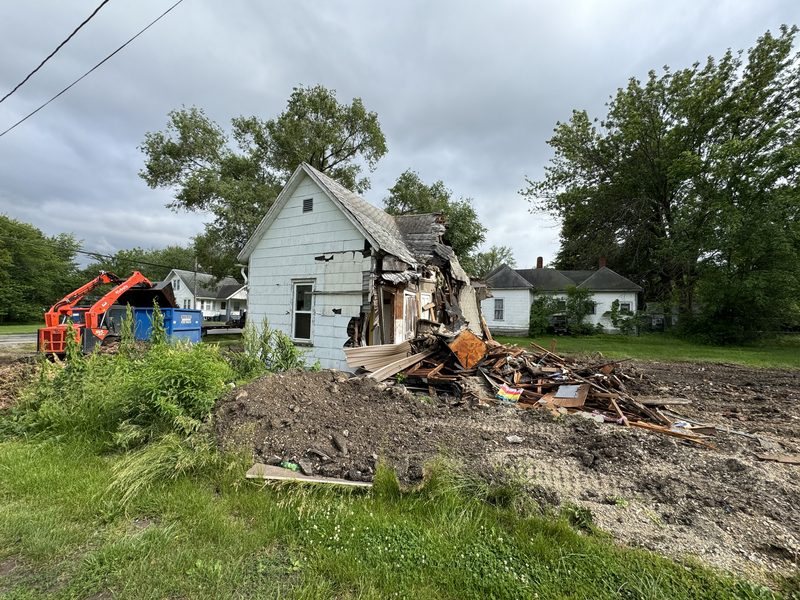
"What happens to the basement?" is the question I get on almost every teardown walkthrough around Columbia. Short answer: the foundation comes out, the hole gets filled in compacted layers, and the lot gets graded so it drains and mows. I'm Chris Kurtz, owner of ATLAS Demolition & Site Work, and foundation removal in Columbia, MO is the part of a demolition that separates a lot you can use from a lot that sinks for a decade. Here's how we do it, what the rules are, and what it costs.
Quick Answer: Foundation removal in Columbia, MO means breaking out the footings, walls, and slab after the structure is down, hauling the concrete to a recycler, then backfilling the hole with clean fill in 8 to 12 inch lifts, compacting each one. For a full basement, plan on $6,000 to $15,000 including the fill. A slab or crawlspace runs $1,500 to $5,000. Wood and debris never go in the hole. Clean concrete sometimes can, depending on the permit office and what the lot is for. Done right, the ground stays flat. Done wrong, you get a sunken rectangle after the first wet spring.
In This Guide:
Why the Foundation Comes Out After a Teardown
When a house comes down, the easy part is over. The frame, roof, and siding are on the ground in a day. What's left is a concrete or stone box in the ground, and that box is the real question on every house, garage and barn demolition job we bid.
There are three reasons the foundation has to go. First, the permit. The City of Columbia and Boone County both treat the foundation as part of the structure, so a demolition permit isn't closed out until it's dealt with. Second, safety and drainage. Foundation walls left at grade are a hole that fills with water, collects trash, and eventually caves. Third, whatever comes next. If you're building, the old foundation almost never meets current code. If you're going back to lawn, a buried concrete box sheds water sideways into your neighbor's basement.
So on nearly every residential job in Columbia, foundation removal is included in the demolition price. The question isn't whether it comes out. It's how much comes out, where the concrete goes, and how the hole gets filled.
Slab, Crawlspace, or Basement: What You're Actually Removing
The type of foundation under the house decides most of the cost and all of the timeline. Here's what each one means for foundation removal in Columbia, MO.
- Slab on grade. A 4 to 6 inch concrete pad with thickened edges or a short footing. Common on ranch houses from the 1960s on, and on nearly every garage. Breaks up fast with the hammer, hauls as a few loads of clean concrete, and leaves a shallow hole that fills in half a day.
- Crawlspace. Block or poured walls 2 to 4 feet tall on a footing, with a dirt floor. Most of the older houses around Columbia, Fulton, and Boonville sit on one. The walls break out easily, but there's often an old furnace, ductwork, plumbing, and a surprise pile of debris under the house.
- Full basement. Walls 7 to 9 feet tall, poured concrete, block, or stone on the oldest houses, with a slab floor. A typical Columbia basement is 800 to 1,500 square feet, which leaves a 250 to 450 cubic yard void once the walls are out. This is the job people underestimate.
Older Columbia neighborhoods near downtown, the Benton-Stephens area, and the old parts of Fulton and Boonville have a lot of hand-dug stone basements. Those come out easier than poured concrete, but the stone takes more loads to haul and the walls were holding back the dirt, so the hole wants to cave as you work it.
How Foundation Removal Works, Step by Step
Here's the sequence on our jobs. The structure is already down and hauled before any of this starts, which we cover in the complete guide to demolition in Columbia, MO.
- Clear the hole. Anything that fell into the basement during the teardown comes out first. Wood, drywall, and fixtures get hauled as debris. Nothing but concrete and dirt stays in that hole.
- Break the slab. Our Cat 308 with a hydraulic breaker punches the floor into pieces a grapple can lift. Even when a slab is allowed to stay, it gets punched through so water drains.
- Take down the walls. Poured walls get broken at the footing and lifted out in sections. Block walls come down with the bucket. Stone walls get pulled from the top so the dirt behind them stays put.
- Pull the footings. This is the step a cheap bid skips. Footings are 16 to 24 inches wide and often 12 inches thick. Leaving them means a hard ring in the ground that shows up the moment someone tries to dig or pour.
- Sort and haul. Clean concrete goes to a recycler in Columbia, where it gets crushed into base rock. Rebar and steel go to scrap. You get the scale tickets. Our concrete removal service runs the same process on slabs and driveways that aren't attached to a teardown.
- Cap utilities below grade. Water, sewer, and gas are already disconnected before demo day, but the stubs in the basement get cut and capped below the final fill line so nothing comes up through the lawn later.
- Backfill and compact. Covered in the next section, because this is where most jobs go right or wrong.
The "just bury it" question: Some contractors will offer to push the walls into the basement, dump dirt on top, and call it done. Missouri DNR treats buried demolition debris as solid waste, and the City of Columbia won't close a permit on a basement full of rubble. Clean concrete in the bottom of the hole is a different thing, and it's sometimes allowed. Wood, drywall, shingles, and siding in the hole never are.
Filling the Basement So It Never Sinks
A basement that's been filled wrong is easy to spot. Drive through any older part of Columbia and you'll see a rectangle in somebody's yard that sits 6 inches lower than the rest of the grass and holds water after every rain. That's a basement that was filled in one afternoon with whatever was on the truck.
Three things make a basement fill-in hold up.
Lifts. Fill goes in 8 to 12 inches at a time, never in one push. On a 400 cubic yard basement that's 8 to 10 separate layers, each one spread flat before the next goes on.
Compaction. Each lift gets worked with the excavator tracks and a plate compactor or roller before the next one goes down. Fill that's just dumped has air pockets in it, and every one of those pockets closes up over the next 3 years. The lifts and the compacting are what turn 450 yards of loose dirt into ground you can stand on.
Clean material. The bottom of the hole can take clean broken concrete where the county allows it and the lot is going back to lawn. The top 3 to 4 feet is always soil, so the lot can be graded, seeded, and mowed. If a new structure is going on the lot, the whole hole gets clean soil or engineered fill placed to a density your engineer or the building department will accept, and we can arrange compaction testing so you have the paperwork.
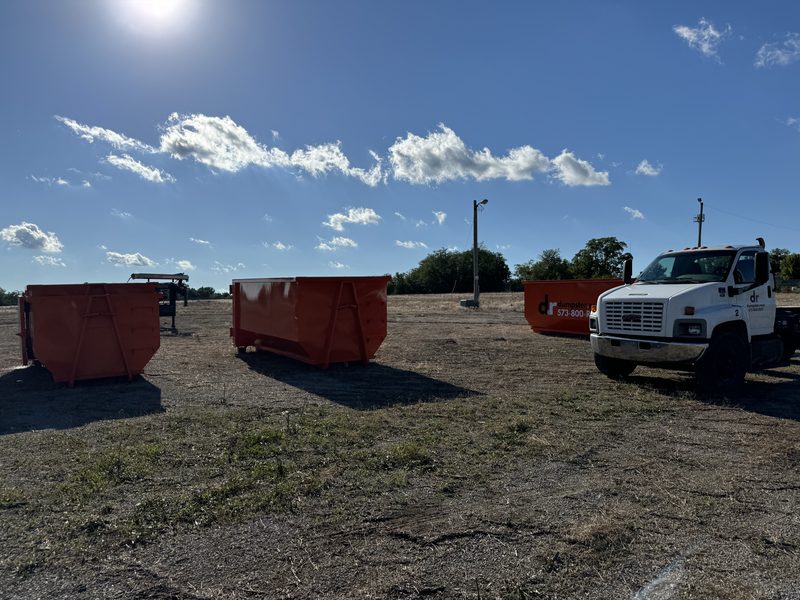
Once the hole is at grade, the disturbed area gets a rough grade so water sheds away from the neighbors and toward the street or ditch. We hold at least 6 inches of fall in the first 10 feet from any structure that's staying. Our post on lot grading after demolition in Columbia, MO covers that finish work in detail, including what a build-ready pad takes versus a lawn.
Got a Basement Hole or a Foundation That Needs to Come Out?
Whether it's the back half of a teardown or a hole somebody else left behind, we'll walk the site and put a fixed price in writing.
Request a Free Consultation Or Call (573) 234-6641What Foundation Removal Costs in Columbia, MO (2026)
These are our 2026 ranges for foundation removal in Columbia, MO. On a full teardown they're already built into the demolition price, so you'll only see them as a separate line if you ask for one or if the structure is already gone.
| Scope | Typical Range |
|---|---|
| Slab or crawlspace foundation removal, with fill | $1,500 to $5,000 |
| Full basement foundation removal, with fill and compaction | $6,000 to $15,000 |
| Basement fill-in only (walls already down) | $2,500 to $8,000 |
| Engineered fill and compaction testing for a build-ready pad | Add $1,500 to $4,000 |
| Concrete disposal (pass-through, recycler) | $40 to $90 per ton |
What moves a job inside those ranges: how deep the walls go, whether it's poured, block, or stone, how far the fill has to be trucked, and whether a machine can get close to the hole. Fill dirt is the quiet cost. A 400 cubic yard basement is 30 to 40 dump truck loads, and where that dirt comes from matters more than the hourly rate on the excavator.
We price it as two numbers. A fixed price for the machine, crew, and fill that doesn't move once you sign, and concrete disposal billed at the recycler's scale ticket with no markup. For where this fits in a whole-house budget, see our house demolition cost guide for Columbia, MO.
What's Different About Foundation Removal in Mid-Missouri
National cost guides don't account for three things that shape every foundation removal in Columbia, MO and the counties around it.
Clay. The soil under most of Boone, Callaway, and Cole counties holds water. That's good for compaction when it's at the right moisture and terrible when it's soaked. After a hard rain we wait a day or two before placing lifts, because clay that's compacted wet turns into a sponge that settles later. It also means a loaded dump truck on a saturated yard leaves ruts a foot deep.
Old basements and old tanks. Pre-1960 houses around Columbia, Fulton, and Boonville often have a hand-dug stone basement, a cistern under the kitchen, or a fuel oil tank buried outside the wall. We find at least one of those on a good share of the older teardowns. A tank that leaked means contaminated soil has to come out before anything goes in, and the permit office will want to see that handled. We'd rather find it on the walkthrough than on day three.
Who issues the permit. Inside Columbia city limits, the demolition permit comes from the City of Columbia Building and Site Development office, and they're the ones who sign off that the foundation was dealt with. You can check current requirements on the City of Columbia permits and licensing page. Outside the city, the rules on what can stay in the hole vary by county, so we confirm them before we quote. On any teardown, the asbestos inspection and the 10-working-day Missouri DNR demolition notification have to be done before the structure comes down, and that paperwork is what covers the foundation work too.
We handle foundation removal and basement fill-in across Columbia, Jefferson City, Fulton, Ashland, Boonville, Moberly, and the rural parts of Boone, Callaway, Cole, Audrain, Howard, and Cooper counties. If someone else tore the house down and left you the hole, we'll bid the fill-in on its own through our backfill, grading and pad prep service.
Frequently Asked Questions
Do you have to remove the foundation when you demolish a house in Columbia, MO?
In almost every case, yes, at least down to a depth that lets the lot be used. The City of Columbia and Boone County expect the demolition permit to cover the whole structure, and leaving foundation walls at grade creates a hazard and a drainage problem. On our jobs the walls come down to at least 3 feet below finished grade, and on most residential teardowns they come out completely. If you plan to build on the same footprint, the old foundation almost never meets current code and should come out anyway. The only time we leave anything is when an engineer signs off on it and the permit office agrees in writing.
Can the old concrete be buried in the basement hole?
Clean, broken concrete can sometimes go in the bottom of the hole, depending on the jurisdiction and what the lot will be used for. Wood, drywall, shingles, insulation, and anything else from the house can never be buried. Those materials rot and the ground sinks with them, and Missouri DNR treats buried demolition debris as illegal dumping. When concrete does stay, it has to be broken small, the slab has to be punched so water drains through, and the top 3 to 4 feet is always soil. If the lot will be built on, we haul all of the concrete to a recycler so the fill under the new structure is uniform and testable.
How much does foundation removal cost in Columbia, MO?
For foundation removal in Columbia, MO, plan on $1,500 to $5,000 for a slab or crawlspace foundation and $6,000 to $15,000 for a full basement, including the fill and compaction. Those are our 2026 ranges from real jobs. If the walls are already down and all you need is the hole filled and compacted, that work runs $2,500 to $8,000 depending on the size of the void and how far the fill has to be trucked. On a complete house teardown these numbers are already built into the price, so you won't see a separate foundation line item unless you ask for one.
How long does it take to fill in a basement after demolition?
Breaking out and hauling a typical residential basement takes 1 to 2 days. Backfilling and compacting it takes another 1 to 2 days, mostly because the fill goes in 8 to 12 inches at a time and each lift has to be worked before the next one goes on. A full house teardown with foundation removal and basement fill usually runs 4 to 6 working days on site, not counting the weeks of permits and utility disconnects beforehand. Wet weather stretches it. Mid-Missouri clay won't compact when it's soaked, so after a hard rain we wait a day or two rather than bury a problem.
Can you build on a filled-in basement?
Yes, if the fill was placed for that purpose. Structural fill under a new foundation needs to be clean soil or engineered material, placed in thin lifts and compacted to a density the building department or your engineer will accept, usually 95 percent of maximum dry density. Fill that was dumped in a few big pushes to get a lawn back will not pass that test, and the new footing will have to go through it to undisturbed ground. Tell us before we quote if a new structure is going on the lot. The fill and compaction get done to that standard from the start, and we can arrange density testing so you have the paperwork for the new permit.
Need Foundation Removal in Columbia, MO or Anywhere in Mid-Missouri?
You know what the job involves now. The difference between a lot that holds and a lot that sinks is the contractor's willingness to do the lifts. ATLAS Demolition & Site Work handles foundation removal and basement fill-in as part of every structural teardown, and as a stand-alone job when the structure is already gone, for property owners and contractors across Columbia, Jefferson City, Fulton, Ashland, and the rest of Mid-Missouri. Fixed price in writing, scale tickets on the concrete, and a lot that's graded and draining when we leave. We answer the phone, show up when we say, and leave the site clean.
- Phone: (573) 234-6641
- Email: chris@deployatlas.com
- Online: Request a Free Consultation