
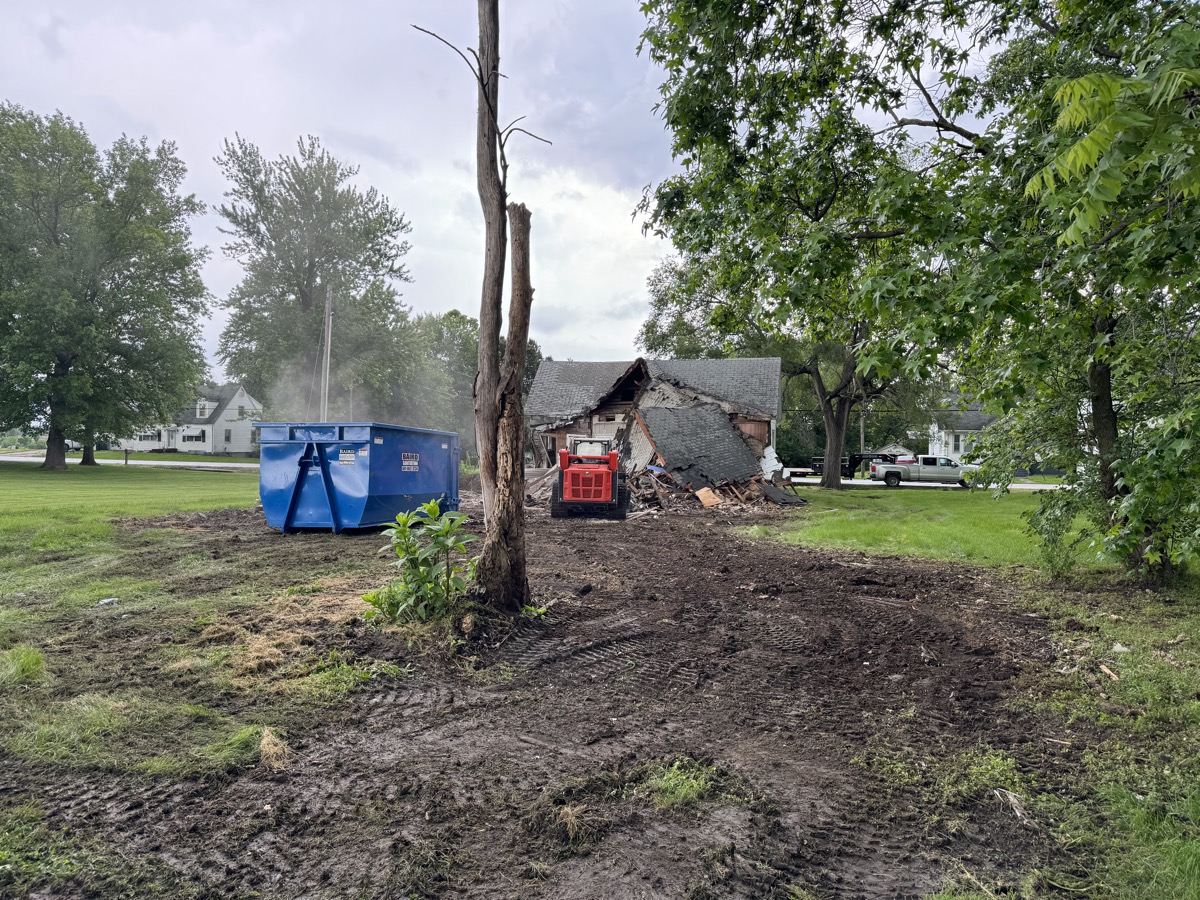
Most calls I get about barn demolition in Mid-Missouri start the same way. The barn has been leaning for a decade. The roof is finally giving out. The county sent a letter, or the family is selling the farm, or a new buyer wants the building gone before closing. The owner has been putting it off because they figured a full barn demolition would cost more than the property is worth to deal with.
I'm Chris Kurtz, owner of Atlas Excavation & Demolition out of Columbia, MO. We tear down barns from Centralia south to Ashland and from Boonville east to Fulton on a regular basis. This guide is what I tell rural property owners when they call, written down. Real numbers, the permit rules that actually apply in Boone and the surrounding counties, and a straight answer on whether the wood is worth saving.
Quick Answer: Barn demolition in Mid-Missouri typically costs $3,500 to $12,000 depending on size, foundation, and access. Most barns come down in 1 to 2 days on site, with 2 to 4 weeks of calendar time for permits and utility disconnects. Inside Columbia city limits you need a demolition permit. In unincorporated Boone County, most agricultural buildings do not require a county permit, but asbestos rules still apply to anything built before 1985. Call Atlas at (573) 234-6641 for a free on-site walkthrough.
In This Guide:
Real Cost Ranges for Barn Demolition in Mid-Missouri
National cost guides put barn demolition between $1,500 and $25,000. That range is too wide to be useful. Here is what I actually quote for barn demolition in Mid-Missouri, based on real jobs we ran across Boone, Howard, Callaway, and Cooper counties this past year.
| Barn Type | Typical Size | Atlas Price Range |
|---|---|---|
| Small pole barn, dirt floor | 24 x 30, single story | $3,500 - $6,000 |
| Standard stick-built barn, slab or dirt | 30 x 40, single story | $5,000 - $8,500 |
| Two-story dairy or bank barn | 40 x 60, stone or poured foundation | $8,000 - $15,000 |
| Large hay barn or horse barn | 50 x 80, slab | $10,000 - $18,000 |
| Tobacco or specialty barn (pre-1940) | Varies, often hand-hewn | Quoted after walk |
What pushes a price up:
- Foundation type. A barn on dirt or a gravel pad is cheaper than one on a poured slab or stone. Stone foundations in particular take longer because we have to break them down by hand or with a hydraulic hammer before hauling.
- Asbestos. Old transite siding, asbestos shingle roofing, and some pipe wraps in dairy barns all need testing if the barn predates 1985. If asbestos is confirmed, abatement adds $1,500 to $4,000 to the job.
- Buried fuel or chemical tanks. Old kerosene tanks, diesel tanks for the tractor, or chemical drums near a tobacco or grain barn add disposal cost and sometimes soil testing.
- Access. A barn at the back of a 40 acre pasture is more expensive than one off a county road. We need a path wide enough for a low-boy and an excavator. If we have to brush hog or rough-grade a path in, that adds time.
- Attached structures. Lean-tos, milk houses, silos, hay sheds, and grain bins attached or adjacent to the main barn all count toward the scope. A "just the barn" conversation usually turns into a "everything in this footprint" conversation once we walk it.
What does not push the price up: the barn being old, leaning, partially collapsed, or full of family junk. We have torn down barns with old tractors, hay, dead animals, and four feet of pigeon droppings inside. None of that scares us. It is part of the job. If you have a question on how cost compares to other structural demos, our house demolition cost guide and garage demolition cost guide both work the same way: flat written price after a walkthrough, no surprises.
Barn Types We See Most Around Mid-Missouri
Mid-Missouri has a specific mix of farm buildings, different from what you would see in Iowa or southern Missouri. Here is what shows up on our jobs, and what each one means for demolition.
Pole barns
The most common ag building in Boone and Callaway counties. Posts in the ground, metal siding, metal roof. They come down fast. An excavator with a thumb attachment can have one on the ground in 2 to 3 hours. The metal goes to recycling. The posts get pulled or cut at grade. Pole barns built after 1990 rarely have asbestos concerns.
Stick-built single-story barns
Wood frame, board-and-batten or lap siding, asphalt or metal roof. These are the classic mid-century barns you see on smaller hobby farms and old homesteads. They take a little longer than pole barns because of the framing, but a 30 by 40 stick-built barn is still a one-day teardown for an experienced operator.
Bank barns and dairy barns
Two-story, built into a hillside so you can drive into the upper level from the high side. Common on older Boone, Howard, and Cooper county farms. Often have a poured concrete or fieldstone foundation, milk house attached, and sometimes a silo nearby. These run 1 to 2 days for the structure, plus a half-day for foundation removal. Higher cost because of size and the foundation work.
Tobacco barns and specialty agricultural buildings
Less common in Boone County than they are further south and east, but you still see them in Fulton and out toward Audrain County. Often pre-1940, often hand-hewn. These are the barns most worth a salvage conversation before we tear them down. The wood is real timber, not modern dimensional lumber.
Loafing sheds, run-ins, and small outbuildings
Often included in the same scope as a main barn. A small loafing shed is usually a 1 to 2 hour add-on at the end of a barn demo day. Pricing them together is almost always cheaper than two separate visits.
Permits and Code in Mid-Missouri
The permit answer changes depending on where the barn sits. Here is the breakdown for the cities and counties we work in.
Inside Columbia city limits
City of Columbia requires a demolition permit for any structure over 200 square feet. The application runs through the city's Building and Site Development office. Most barn demos inside the city are not common because most barns are on rural parcels, but they do come up on older near-downtown properties and on parcels recently annexed. The permit takes 1 to 3 weeks. You can review the city's process at the Columbia Building and Construction page.
Unincorporated Boone County
This is where most of our barn work happens. Boone County does not require a county-level demolition permit for agricultural buildings on parcels zoned A-1 or A-2. You still need:
- Confirmed utility disconnects in writing (electric, propane, water if any)
- A Missouri One Call locate, three working days minimum before any digging
- For pre-1985 structures, a NESHAP-compliant asbestos inspection (Missouri DNR rule, not a county rule, applies statewide)
Atlas handles all of these on the job. You do not need to know which paperwork goes to which agency. We file it.
Howard, Callaway, Cooper, Audrain, and Cole counties
Similar to Boone for agricultural land. Most rural ag demolitions in these counties are unpermitted at the county level but still subject to state asbestos rules and utility disconnect requirements. A barn inside the limits of a smaller city (like Centralia or Rocheport) sometimes triggers a city permit. We check before we quote.
Asbestos is the rule that catches people
Anything built before 1985 needs an asbestos inspection before demolition under the federal NESHAP rule, enforced in Missouri by the Department of Natural Resources. Old transite roofing on a dairy barn, certain siding panels, and pipe wrap on milk lines are the common ones we find. The inspection is a half-day on site and 5 to 10 business days for lab turnaround. If results come back clean, we are clear to demolish. If asbestos is confirmed, abatement runs another week or two. For the state's official guidance, see Missouri DNR's asbestos program page. For more on Mid-Missouri permit specifics generally, our demolition permit guide for Columbia, MO covers the city side in detail.
The Reclaimed Wood Question (An Honest Answer)
This is the question I get on almost every barn call. "Can I save the wood? Can I sell it? Will the reclaim guy take it for free in exchange for taking the barn down?"
The honest answer is: it depends on the barn, and most of the time the math does not work the way people hope.
Barns where deconstruction can make sense:
- Pre-1920 timber-frame barns with intact hand-hewn beams
- Original lap siding in long, clear boards (not split, not rotten, not painted with lead)
- Full-dimension rough-sawn oak or chestnut framing
- Identifiable historical features (square nails, mortise-and-tenon joints, dated stones)
Barns where deconstruction almost never pencils out:
- Post-1960 pole barns and stick-built barns with dimensional pine framing
- Anything with extensive rot or termite damage
- Barns with painted siding (paint kills resale value of reclaimed wood)
- Barns where the roof has been open to weather for more than 5 years
Deconstruction by hand can double or triple the labor cost of straight demolition. The reclaimed wood market in central Missouri is real but it is also picky. A clear, dry oak beam in good shape is worth real money. A weathered pine 2x6 with paint on it is worth less than the time it takes to pull the nails out.
What I recommend on most jobs: if you have specific pieces you want to save (a few beams for a mantle, the door hardware, a section of siding for a project), pull those before we get there. We will work around what you set aside. For the rest, straight demolition is usually the right call, and we can sometimes connect you with a reclaim outfit if the barn is genuinely worth their drive.
The Atlas Barn Demolition Process
Here is exactly what happens from your first call to a flat pad.
- Phone call. 10 to 15 minutes. We talk through the barn size, where it sits, utilities, age, and what you want left behind (slab, no slab, fill the foundation, leave it open). I will give you a rough range on the call so you know if it is worth a site visit.
- Free on-site walkthrough. Usually within a week. I walk the property, measure the building, check access for the low-boy, look for asbestos red flags, and confirm what utilities are running to the barn. No charge, no pressure.
- Flat written quote. Within 48 hours of the walk. One number, all in. Includes tear-down, hauling, foundation handling (per your spec), and rough grade. If asbestos testing is required, that is called out as a separate line because we cannot know the result yet.
- Permits, utilities, locates, asbestos. We handle the paperwork. Calendar time on this stage is 2 to 4 weeks for most jobs.
- Demolition day. Excavator and crew show up. Small pole barn is on the ground in a morning. Larger barn is 1 to 2 days. Material gets sorted on site (metal to recycling, wood and shingles for hauling).
- Foundation and rough grade. If you wanted the slab or foundation gone, that happens at the end of the demo. Pad gets graded flat, drainage set, ready for whatever is next.
- Walkthrough and sign-off. You walk the site with us. Anything that needs touch-up gets touched up before we leave.
The whole process is built so you make one decision (yes, tear it down) and then we run the job. No 14 phone calls, no surprise invoices, no contractor who stops returning calls in the middle. Modern equipment, old-school work ethic.
What Happens to the Barn After It Comes Down
Every barn demolition generates four categories of material, and they each go somewhere different.
Metal roofing, siding, and structural steel goes to a Columbia scrap yard for recycling. On most barn jobs, the scrap value offsets a small piece of the haul cost. We do not pay it back to you on the quote because it is unpredictable, but it does help keep the price honest.
Wood (framing, sheathing, siding) goes to a permitted construction and demolition landfill in Mid-Missouri unless we have arranged for reclaim ahead of time. We do not burn wood debris on site, even when the parcel is rural and burning would be legal under a county open-burn permit. Burning a whole barn produces enough smoke to draw complaints from a mile away, and the ash pile is a problem we would rather not leave.
Concrete and stone foundation pieces go to a crushing pad in Columbia where they get processed into base rock for new construction. Concrete from a barn floor or stone from an old fieldstone wall both recycle the same way.
Asphalt shingles, treated lumber, and general C&D debris go to a permitted C&D landfill. For a full write-up of the debris stream, see our blog post on demolition debris disposal in Columbia, MO.
What we do not do: bury debris on the property. I have walked too many properties where a previous owner buried old barn material on the lot to save haul costs, and then the new owner finds it 10 years later when they try to dig a footing or run a septic line. Burying construction debris is a Missouri code violation and it shows up eventually. Atlas hauls everything off, period.
After the Barn Is Gone
A flat pad opens up options. The most common things people do with the footprint after a barn comes down:
- Pasture or hay ground. If the pad is open dirt, we can roll it, seed it, and you have grass coming up within a few weeks in growing season. We do not seed by default but can include it on the scope.
- New build pad. If you want a new pole barn, shop, or shed in the same spot, we can leave a level, compacted pad ready for the new structure.
- Lot clearing tied in. A lot of barn demos come with overgrown fence rows, brushed-up perimeters, or volunteer cedar that has grown up around the old building. We can roll our land clearing service into the same visit and handle brush hogging, fence line clearing, and lot cleanup at the same time. Saves a trip and gets the whole property usable again.
- Subdivide and sell. If the barn coming down is part of prepping a farm for subdivision or sale, the cleared, graded site is what buyers want to see.
Whatever the next step is, the pad we leave after a barn demolition is built to take it.
Got a Barn That Needs to Come Down?
Atlas Excavation & Demolition handles barn demolition across Mid-Missouri with a flat written price and a real timeline. Free on-site walkthrough, no pressure. Get on the schedule.
Get Your Instant Estimate Call (573) 234-6641Frequently Asked Questions
How much does barn demolition cost in Mid-Missouri?
Most barn demolition jobs in Mid-Missouri run between $3,500 and $12,000, all in. A small pole barn or 24 by 30 stick-built barn on a dirt floor sits closer to $3,500 to $6,000. A larger bank barn or two-story dairy barn with stone or poured foundation runs $8,000 to $15,000, sometimes more if there is asbestos siding or a buried fuel tank. The price covers tear-down, hauling, and rough grade of the pad. Atlas writes a flat number after a free on-site walk, so you are not chasing change orders mid-job.
Do I need a permit to tear down a barn in Boone County?
It depends on where the barn sits. Inside Columbia city limits, any structure over 200 square feet needs a demolition permit from the city. In unincorporated Boone County, most agricultural buildings on parcels zoned A-1 or A-2 do not require a county demolition permit, but you still need utility disconnect letters and a Missouri One Call locate. If the barn is older than 1985 or has any siding or roofing that might contain asbestos, Missouri DNR requires a NESHAP-compliant inspection no matter where the building sits. Atlas handles permits, locates, and the asbestos paperwork on every job.
Can I save the wood from my old barn?
Sometimes. Old hand-hewn timber, full-dimension oak beams, and original siding boards have real resale value if they are in shape and you have a buyer lined up. Deconstruction by hand can double the labor cost of straight demolition, but salvaged lumber can offset some or all of that if the wood is good. The honest answer is that most barns built after 1960 in Mid-Missouri are sawn pine or rough-cut, and the salvage value rarely covers the deconstruction premium. A pre-1920 timber-frame barn with intact beams is a different conversation. Atlas can walk the building and tell you straight whether deconstruction makes sense.
How long does barn demolition take?
Most barn demolitions in Mid-Missouri are a one to two day job on site. A small pole barn comes down and gets loaded out in a single day. A larger bank barn or two-story dairy barn usually takes two days, sometimes a third for foundation removal and final grade. Calendar time from your first call to a flat pad is usually 2 to 4 weeks, mostly waiting on utility disconnects and, for older barns, asbestos lab results. We do not start machines until those clearances are in hand.
What happens to the debris after a barn is torn down?
Atlas hauls everything off as part of the flat price. Wood and metal go to recycling when possible. Concrete and stone foundation pieces go to a recycling pad in Columbia for crushing and reuse as base material. Treated lumber, shingles, and any general construction debris go to a permitted Missouri C&D landfill. We do not burn debris on the property and we do not bury it on site, even when the parcel is rural and nobody would notice. Burying construction debris is a code violation in Missouri and it shows up later when somebody tries to build.
Get a Real Quote for Your Barn Demolition
If you have a barn in Columbia, Ashland, Boonville, Fulton, Centralia, Harrisburg, Hallsville, Rocheport, or anywhere in the rural areas of Boone, Howard, Callaway, Cooper, Audrain, Cole, or Moniteau counties that needs to come down, I am glad to come walk it and put a flat number in front of you.
- Phone: (573) 234-6641
- Email: hello@deployatlas.com
- Online: Instant estimate form
For related reading, see our full demolition cost guide for Columbia, Missouri, our demolition services page, our demolition timeline guide, and our land clearing service for everything around the barn footprint.